

2026-10-09 APP 2.0.0-beta48 has been released !
This is mainly a bug fix release for the reported bugs in beta47. In addition it has a significant User Interface performance improvement noticable when you need to process 1000s of images in APP.
2026-10-03 APP 2.0.0-beta47 has been released !
This is a very big release... many code optimizations/rewrites, many parts of APP are much faster and more precise, especially star analysis and registration are much faster ! Big mosaics will go much faster 🙂
And we introduce a new preview filter, which includes the new Adaptive Deep Sky Stretch and a General Levels Stretch, this has been long over due. The old preview filter (the panel on the right side to stretch and preview your data) has not been updated for a couple of years and it is a critical part of any APP session.
Adaptive Deep Sky Stretch or ADSS is a much more intuitive stretch algorithm. It is also color preserving (which is a great new addition in itself ! ) which means that the highlights are no longer bleached, color is maintained from the linear data while stretching. You can simply stretch your data using the sky background level and signal width sliders which work much easier and more intuitive. You no longer need to fiddle with the old complicated sliders with zoom buttons. All the zoom buttons for the sliders are made redundant. And you can enter slider values in the slider value fields yourself. I will make a youtube video in the coming days to explain and fully introduce ADSS. Once the video is ready, it will be highlighted on the forum.
RGB Combine upgrade !. The RGB Combine Tool has been rewritten mostly. The tool is faster and easier to use and most importantly, the Luminance slider to inject a luminance channel or channels into the RGB composite is now working correctly. It no longer bleaches the RGB colors. Combined with the new ADSS preview, you will get much better and easier great composites with great color! I will also explain this in a new youtube video.
Why is APP analyzing frames for LNC when "No LNC" has been chosen? This takes a very long time. I can't remember this happening before.



Edit:
Even not directly related, this happened with the same dataset after I had saved the splitted and calibrated light files. I pressed Integrate to run the full process and the error occurred.
There after I realized that a process was running in the console window, looked like some form of calibration.
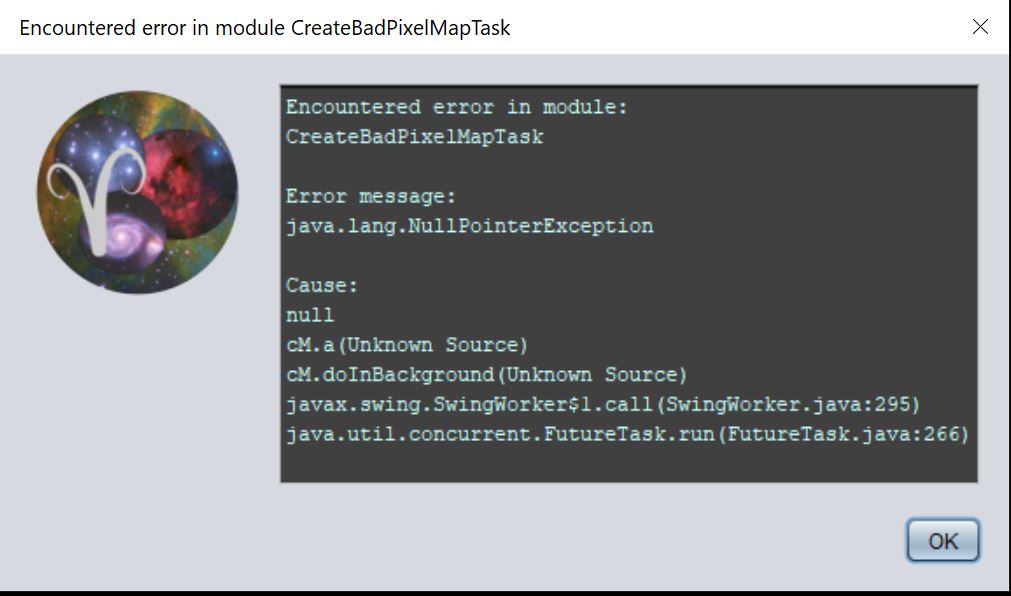
I decided to shut APP down and start again.
It shouldn't indeed, is this happening all the time for you now?
@vincent-mod I'm not sure, but I think so. At least it has happened a couple of times. I have a huge stack processing right now that will probably take all night, but I'll keep an eye out for this.
@vincent-mod I can now confirm that this happens on every integration as the image shows.

When this integration finishes I will restart the computer and run a small test just to be sure that there is not some hick-up in the system somewhere.
Yes, it happens to me too...
Mmm, that is weird, thanks for notifying us I will pass this on to Mabula.
Ah wait, I think what the console mentions above is something else actually. LNC rejection parameters is different from the LNC normalization correction. That shouldn't take place when switched to "no LNC". I've asked Mabula for a bit of extra clarification.
And this is indeed the case. So Local Normalization Rejection, as the console mentions, is an outlier rejection algorithm (unique to APP). Local Normalization Correction is for correcting gradients. I agree, can be confusing as the names are very similar. 🙂
Thanks for the clarification. Really got me confused at least. Is this new to 1.083? I can't remember seeing this before.
It may just be my imagination, but has there been any other changes to the integration module lately? Especially on the part of the process where APP says Integrating pixels, and is counting. As I remember it, it used to be faster. But it is probably just me being impatient. 😀
No it shouldn't be changed really. Maybe there is more output now in the console about it, in general the speed of APP has improved quite a bit since the previous versions. 🙂
