
UPDATE FROM MABULA
I have had a very rough 2 months unfortunately health wise. I was struck 3x in a row with bacterial infections. The second infection occurred after a routine hospital checkup and I became very sick. I had to rest and take a lot of antibiotics. Once I was recovering and restarting work 1 month ago, I again became sick. The infection was not yet gone, so even more antibiotics and rest was needed. Needless to say, it took a lot of my energy and I needed a lot of rest.
Finally, the infection is really gone and my energy is coming back step-by-step now and I have started work again. I am terribly sorry to have kept you waiting for support. I will address all outstanding questions and e-mails step-by step and will be on the forum daily from today.
APP 2.0.0-beta47 will come soon as well, a lot of work was already completed before I became very ill, so the release is also nearly ready for you. Beta47 will be much faster actually. Many workflows will be more than 2x faster, mosaics can even be 10x faster than before because registration really received a major boost... all compared to beta46. Before I release it, I will make sure that everything is working properly and then I will release it.
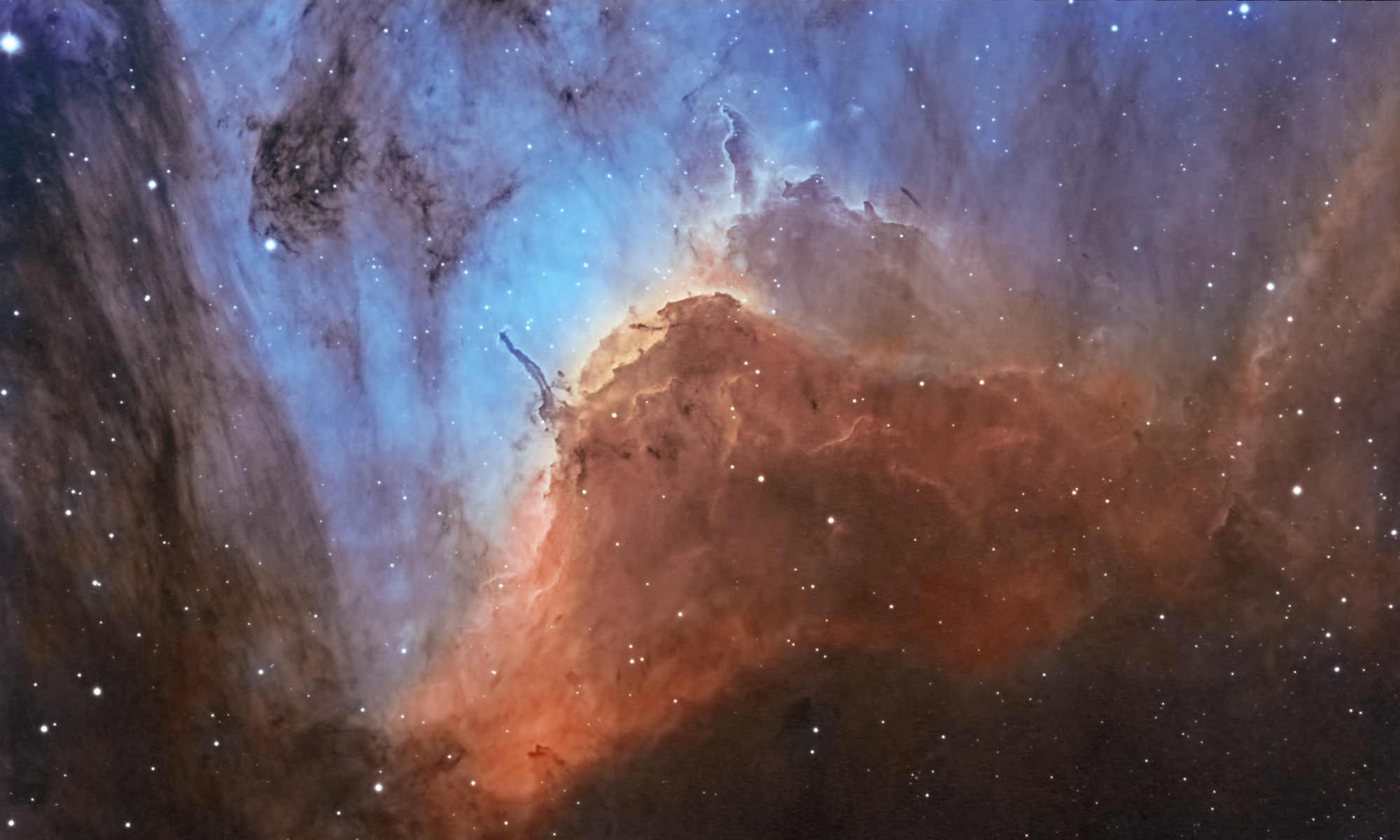
Just a note of praise for the APP ability to deal with mosiacs and especially random orientation framing from different sessions, scopes, cameras and camera angle. Here is the integrated stack of 8 hours for ngc 6888 taken from 3 sessions with 2 different cameras, one 12 bit micro 4/3) and the other 16 bit (APS-C). Completely different framing yet with correct LNC, rejection and registration/integration settings the raw stack looks perfect. Cannot o this with any other software form the raw subs in a single integration, even with two different bayer patterns (which the fits header rewriting was very useful in the new beta release).
Star reduction still too many artefacts to use, unfortunately, but the blending for integration is superb, even before any LPC of further APP 'tools' processing is done.
CS, Col

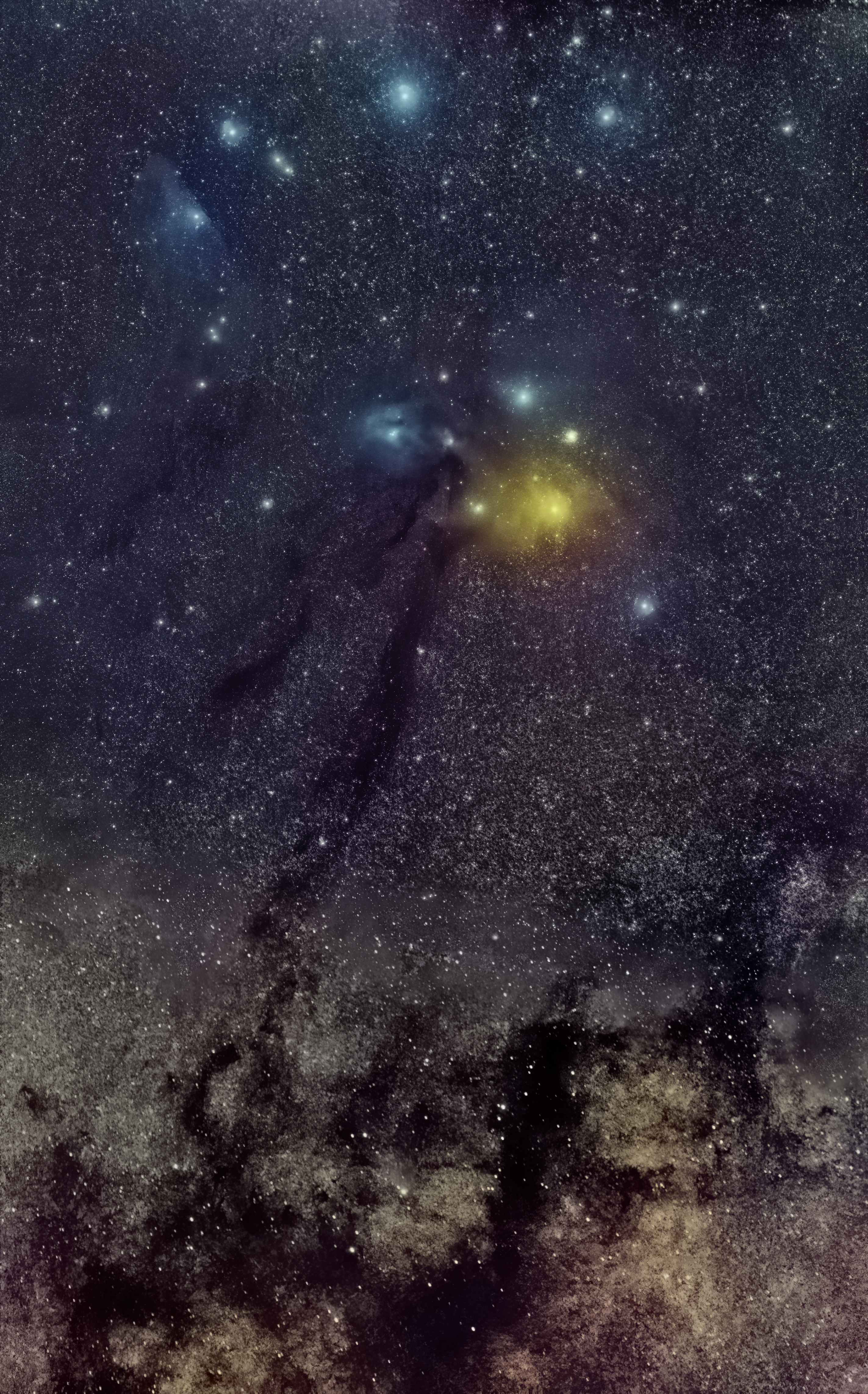
I have to agree, usually. My latest was a lot more of a challenge. I had LNC up to 4th degree and 3 iterations, MBB up to about 15%, but still got this. I finally just gave up and hacked it in Photoshop. Since the integrations were taking over an hour I couldn't try too many different sets of settings, although I suppose I could have tried it with subsets of subs.

That does look challenging. I had 2nd degree LNC, 2 iterations, MBB up to 15%. I disabled 'same camera and optics' obviously, but also increased the scale stop for registration to 10. At the same time, I ensure to have flip x/y descriptors checked. The only errors during the initial steps were at registration, and the scale stop and other choices fixed that before final integration. Mine is a OSC camera, but it worked for normal interploration and for drizzle since I undersample with this scope a bit.
I did try it with "same camera & optics" both on and off, with scale start at 1 and stop at 10.
I mean, this is just a torture test -- a glance at the center region and the Milky Way below is enough to confirm that! Center integration was from FITS files with three different sub lengths (15", 30", 600") at ISO 400, top and bottom margins are from the second night at ISO 1600 and 120" exposures.
It's pretty easy to see where the seam was in the final brutally-Photoshopped result, but if you don't have the original in front of you, it's possible to convince yourself that it's a sky transition and not just cutting the "good" portion off the bottom, moving it up to eliminate the dark trough, and then making with the Spot Healing like a D&D wizard in a boss fight.
Even the Light Pollution Correction tool struggled with the crazy gradients in this image. But I am not too unhappy with the result, all things considered.