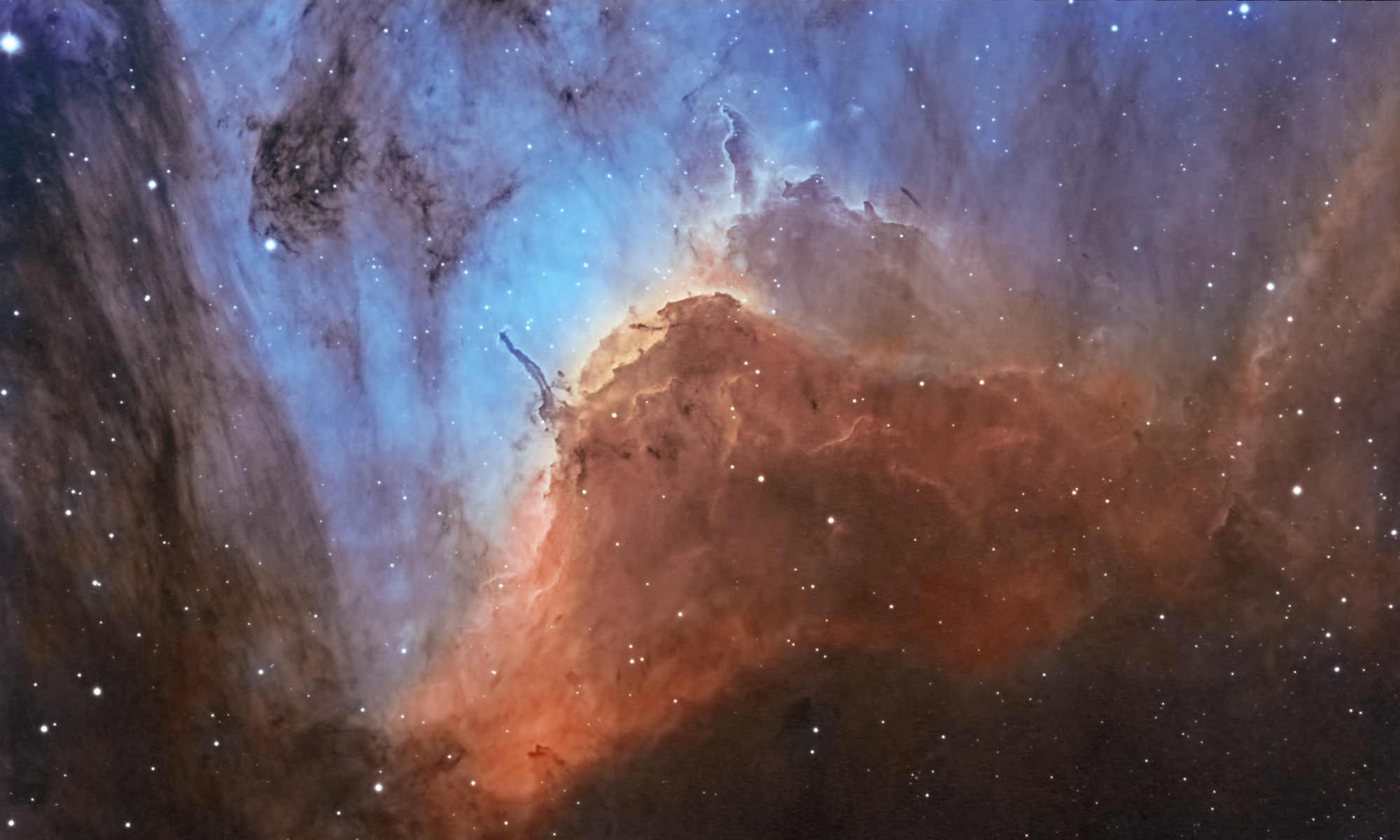

2026-10-09 APP 2.0.0-beta48 has been released !
This is mainly a bug fix release for the reported bugs in beta47. In addition it has a significant User Interface performance improvement noticable when you need to process 1000s of images in APP.
2026-10-03 APP 2.0.0-beta47 has been released !
This is a very big release... many code optimizations/rewrites, many parts of APP are much faster and more precise, especially star analysis and registration are much faster ! Big mosaics will go much faster 🙂
And we introduce a new preview filter, which includes the new Adaptive Deep Sky Stretch and a General Levels Stretch, this has been long over due. The old preview filter (the panel on the right side to stretch and preview your data) has not been updated for a couple of years and it is a critical part of any APP session.
Adaptive Deep Sky Stretch or ADSS is a much more intuitive stretch algorithm. It is also color preserving (which is a great new addition in itself ! ) which means that the highlights are no longer bleached, color is maintained from the linear data while stretching. You can simply stretch your data using the sky background level and signal width sliders which work much easier and more intuitive. You no longer need to fiddle with the old complicated sliders with zoom buttons. All the zoom buttons for the sliders are made redundant. And you can enter slider values in the slider value fields yourself. I will make a youtube video in the coming days to explain and fully introduce ADSS. Once the video is ready, it will be highlighted on the forum.
RGB Combine upgrade !. The RGB Combine Tool has been rewritten mostly. The tool is faster and easier to use and most importantly, the Luminance slider to inject a luminance channel or channels into the RGB composite is now working correctly. It no longer bleaches the RGB colors. Combined with the new ADSS preview, you will get much better and easier great composites with great color! I will also explain this in a new youtube video.
I recently added an 8" SCT to my telescope collection which I'm initially shooting at reduced focal length of 1260mm. Initial image stacks on test subjects were fine but then I encountered an odd experience where certain subs would fail registration. No obvious reason why APP was doing this as immediately preceding or following subs with similar quality scores, star counts etc were passed. Visually the subs looked identical. Tried all the usual advice like increasing star count, selecting different camera and optics, increasing scale stop etc. None of it worked though with different settings sometimes different subs would fail. Eventually I managed to get it to register all subs by using Mosaic integration even though all subs were of the same target and overlapped except for dither differences. Whilst this worked it took a long time to complete registration. Clearly all subs are able to be registered, normalised and integrated so not sure why the normal method had this problem. Happened with beta29 and beta34.
Hi Callum @scott44,
Thank you very much for posting your issue. It sounds like a weird one indeed. Can you try the following for me and let me know if this solves the problem with simply analyzing and normally registering the frames:
in 3) analyse stars, can you enable the cosmic ray/noise reducer and set it to a value of 15 to 20? Then analyze the stars and try to register. Please take a note of the star count, and also check how the star map looks on your calibrated images. Are in fact the stars analyzed, or perhaps noise like hot pixels?
Mabula
@mabula-admin Hi Mabula - thanks for the response. I worked out what the cause was. The standard star count of 500 was the issue shooting at this longer focal length and this was exacerbated when I followed advice to increase the star count to improve registration. I reduced the star count to 40 and all the subs registered fine in normal mode. Sorry not used to shooting above 1000mm FL.
Hi Callum, @scott44
Thank you very much for your feedback. I think my solution will be more robust:
in 3) analyse stars, can you enable the cosmic ray/noise reducer and set it to a value of 15 to 20?
Then the star count can stay at 500 and you will be able to find more stars and thus get more precise registration/alignment of your images. Did you try the noise reducer in 3) ?
Mabula
@mabula-admin Hi Mabula - just tried it out by enabling the noise reducer with a value of 15 and that fixed it as well. I'll stick to your method. Many thanks.
Great Callum @scott44,
Please try now with APP 2.0.0-beta35 that I released today. It has a big improvement in star analysis that could solve the issue as well. So please try in beta35 without enabling the noise reducer and let me know if all is good now then as well 😉
Mabula
