
2026-10-09 APP 2.0.0-beta48 has been released !
This is mainly a bug fix release for the reported bugs in beta47. In addition it has a significant User Interface performance improvement noticable when you need to process 1000s of images in APP.
2026-10-03 APP 2.0.0-beta47 has been released !
This is a very big release... many code optimizations/rewrites, many parts of APP are much faster and more precise, especially star analysis and registration are much faster ! Big mosaics will go much faster 🙂
And we introduce a new preview filter, which includes the new Adaptive Deep Sky Stretch and a General Levels Stretch, this has been long over due. The old preview filter (the panel on the right side to stretch and preview your data) has not been updated for a couple of years and it is a critical part of any APP session.
Adaptive Deep Sky Stretch or ADSS is a much more intuitive stretch algorithm. It is also color preserving (which is a great new addition in itself ! ) which means that the highlights are no longer bleached, color is maintained from the linear data while stretching. You can simply stretch your data using the sky background level and signal width sliders which work much easier and more intuitive. You no longer need to fiddle with the old complicated sliders with zoom buttons. All the zoom buttons for the sliders are made redundant. And you can enter slider values in the slider value fields yourself. I will make a youtube video in the coming days to explain and fully introduce ADSS. Once the video is ready, it will be highlighted on the forum.
RGB Combine upgrade !. The RGB Combine Tool has been rewritten mostly. The tool is faster and easier to use and most importantly, the Luminance slider to inject a luminance channel or channels into the RGB composite is now working correctly. It no longer bleaches the RGB colors. Combined with the new ADSS preview, you will get much better and easier great composites with great color! I will also explain this in a new youtube video.
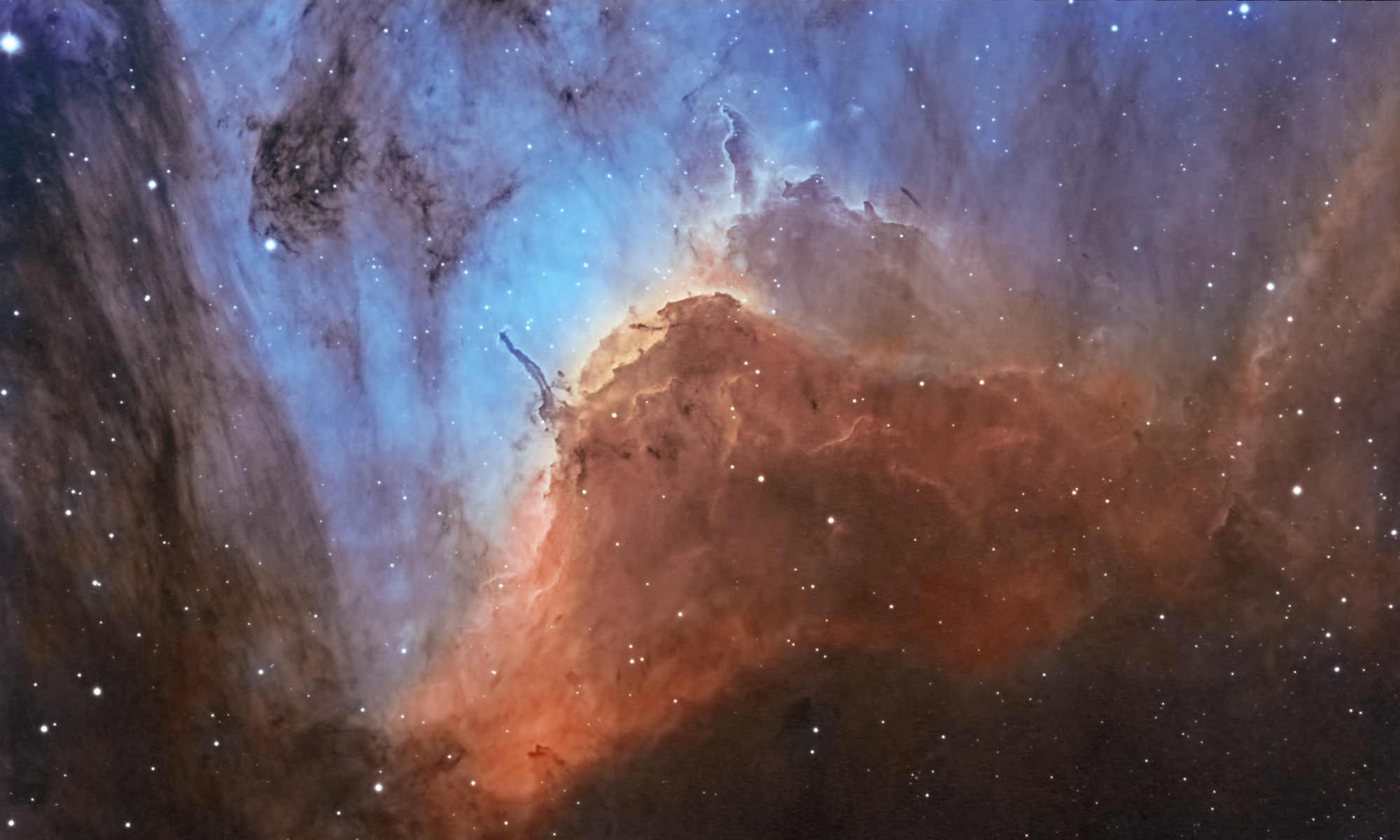
I'm trying to add the SII channel from a friend's SII/OIII integrated image to my integrated images of Ha and OIII. To do this I need to extract the SII from the SII/OIII integrated image he provided. But I guess because there is nothing to integrate, I think the process just quits.
So how do I do it, extract SII from a single image?
Hi @astrogee,
Thank you very much for your question.
Since the image is integrated, it means it is no longer Color Filter Array or CFA data that needs to be demosaiced. So you can not use an extract algorithm of 0) Raw/Fits for demosaicing.
The solution in this case is: since the integrated image has SII and O3, you can safely assume that the first channel, the red channel, of the integration has only SII data. The green and blue channels will be the O3 data. If the data is already postprocessed, the assumption is less valid of course. So simply split the channels of the integration. You can do this with the split channels option in 2) Calibrate, or you can load the integration into the RGB Combine Tool. The tool will automatically split it into R, G, B components. Say yes to load the R component, assign SII filter to it and for the 2 other channels, you can cancel them, they won't be loaded then into the RGB Combine Tool. Then load your Ha and OIII images and assing the channels correctly. Then you are already set up to make a Sii, Ha, O3 composite.
Let me know if this is clear.
Mabula
Thank you @mabula-admin. Yes, it made sense as I stepped through your procedure. Unfortunately, I realize now I can't combine data from a newtonian with a refractor. The SII resulted in red vane spikes in the combined image 😮 I guess I'll have to go out and collect my own SII data 😎 Thanks again!
