Jan 31 2026: APP 2.0.0-beta40 will soon be released with many fixes especially for Linux, upgraded development platform and 10-20% performance boost !
Jan 15 2026: FIXED LICENSE SERVER VPN Tunnel issue
The issue could have prevented APP to start when using a VPN tunnel or another complicated network configuration, like using APP on a remote computer on a different continent. This issue is fixed now and APP should start normally.
Jan 04 2026: Update on the 2.0.0 release & the full manual
We are getting close to the 2.0.0 stable release and the full manual. The manual will soon become available on the website and also in PDF format. Both versions will be identical and once released, will start to follow the APP release cycle and thus will stay up-to-date to the latest APP version. Unfortunately, Mabula was struck by a severe flu virus in the past couple of weeks and thus could not work. He is getting much better now and he has resumed work to release 2.0.0 as soon as possible. Once 2.0.0 is released, the price for APP will increase. Owner's license holders will not need to pay an upgrade fee to use 2.0.0, neither do Renter's license holders.
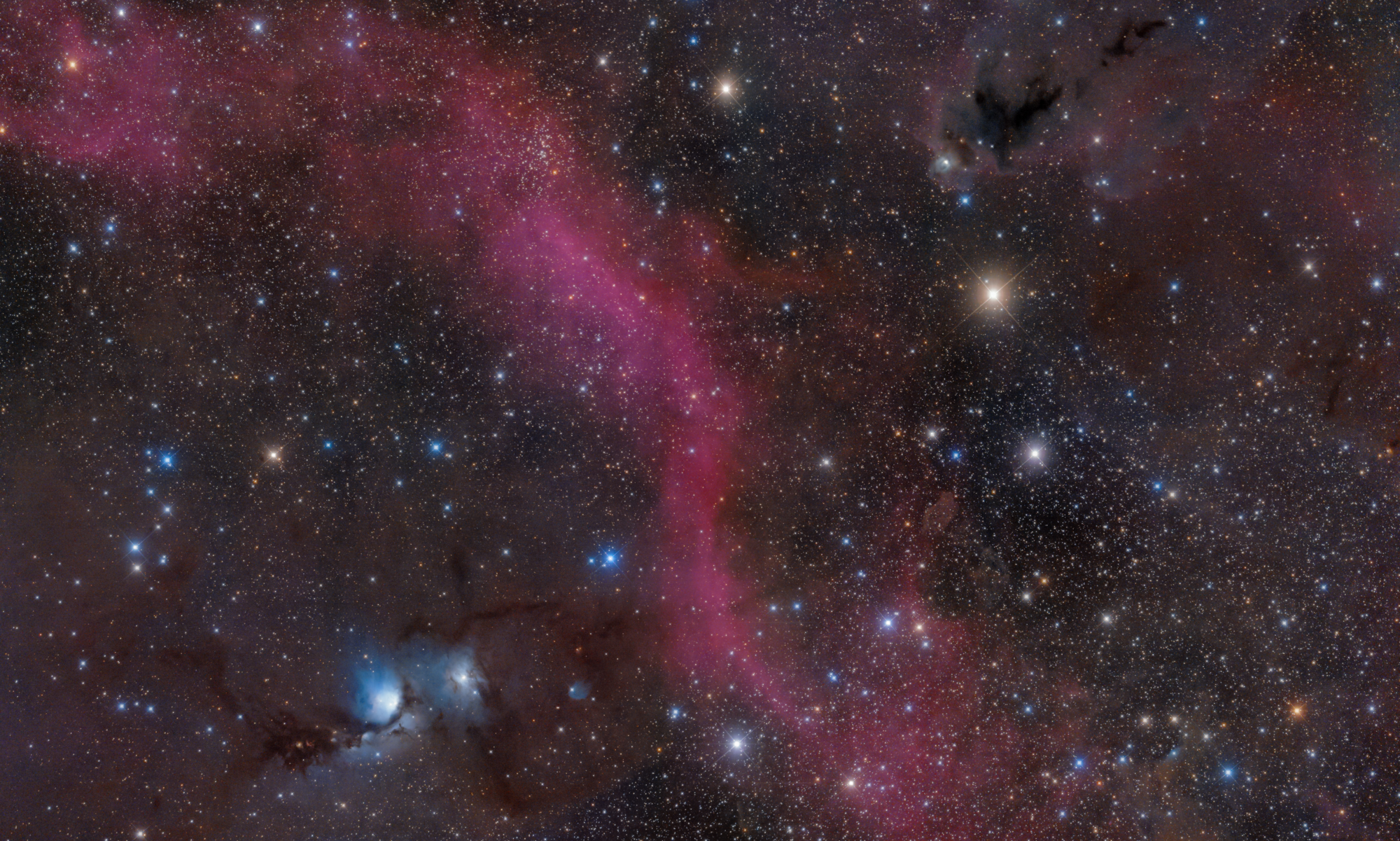
I've been working on stacking images of the Rosetta Nebula from two imaging sessions on January 24th and 25th. I've noticed a significant difference in the results depending on the stacking method. Stacking the final TIFF files produced by the Vespera Pro yielded a much-improved image compared to stacking the individual 1178 sub-exposures in APP. The stacked image generated using the Vespera Pro stacked session Tiff was superior to my attempt at stacking 1178 subs. I'm sharing the final outputs from both workflows for your comparison. I'm hoping you can offer some insights into how I could improve my processing workflow to achieve results comparable to Vespera's output. I would appreciate any guidance.
I have to say, I think APP has done a better job. I have no association with APP - I'm just a user like yourself. Its just that the Vespera image has post processing that has not yet been done to the APP image.
I don't mean to offend, but the Vespera image has been stretched more strongly, has too much saturation, and looks like it has had some noise reduction applied.
I copied your pasted APP image and spent 2 mins boosting the stretch, saturation and contrast and then applied some light noise reduction and got this-
What I did was quick and rough and a better job could be done. I just wanted to show that you are not really comparing images at the same stage of processing. I used Gimp (and Topaz) for these tweaks. Some of it can be done in APP, but I think many of us do final tweaks in Gimp/Photoshop or other tools.
@connor231, I follow a similar workflow to the one you described. I use Astro Pixel Processor (APP) for stacking and integration, then move to PixInsight for most of my post-processing and stretching. Final color grading, gamma adjustments, and resolution enhancement are done in Photoshop and Topaz. While the Vespera image is stretched, its color reproduction is remarkably close to the Hubble reference image, which is the look I'm also aiming to recreate.
I've been working on stacking images of the Rosetta Nebula from two imaging sessions on January 24th and 25th. I've noticed a significant difference in the results depending on the stacking method. Stacking the final TIFF files produced by the Vespera Pro yielded a much-improved image compared to stacking the individual 1178 sub-exposures in APP. The stacked image generated using the Vespera Pro stacked session Tiff was superior to my attempt at stacking 1178 subs. I'm sharing the final outputs from both workflows for your comparison. I'm hoping you can offer some insights into how I could improve my processing workflow to achieve results comparable to Vespera's output. I would appreciate any guidance.
It is like John @connor231 indicates I think. You are comparing apples with some other fruit here 😊 .
From my perspective: if I look at the Vespera image, I see a highly over-processed image with very blown out stars and a lot of information from the low lights is simply gone which I don't like nor would advise.
The APP stack result looks noisy, because the stretch from APP is too strong here for a final result. So stretch less. Furthermore, the colors can be greatly tweaked in APP by using the RGB COmbine Tool, to create the color palette that you prefer. You should see then a much improved version from APP compared to this Vespera result I would think.
Thank you for your guidance. As someone new to Astro, I'm learning something new every day. While I've been enjoying the ease of use of my Vespera, I'm also eager to start using my 8" RC telescope, which offers improved optics and an enhanced image train, as soon as the weather cooperates. I'm still working on understanding what makes a good stretch, and I appreciate your help in that area. I'll keep practicing until I get it right. My intention wasn't to compare the APP to other tools but rather to confirm that I was processing my images accurately.