
May 27 2026 APP 2.0.0-beta45 has been released !
Fully Multi-Threaded LNC, many improvements for the registration engine, platform upgrade, and further tuning of internal memory consumption and memory release back to OS.
Apr 14 2026: Google Pay, Apple Pay & WeChat Pay added as payment options
Update on the 2.0.0 release & the full manual
We are getting close to the 2.0.0 stable release and the full manual. The manual will soon become available on the website and also in PDF format. Both versions will be identical and once released, will start to follow the APP release cycle and thus will stay up-to-date to the latest APP version.
Once 2.0.0 is released, the price for APP will increase. Owner's license holders will not need to pay an upgrade fee to use 2.0.0, neither do Renter's license holders.
Hi all,
This is my second time trialling APP. First time around I didn't know what I was doing, this time a year later I think I'm more clued up - but I'm still not quite getting the results I'd expect when compared to the free Deep Sky Stacker, and I'm wondering whether I'm doing something wrong here.
I've been testing them against each other, trying to process them as closely as possible, and honestly I'm not seeing much of a difference. My hardware is a modded EOS1000D, Sky-Watcher 130PDS on an NEQ6. I'm capturing using APT, then stacking in DSS using the Auto Adaptive mode, and in APP using the recommendations here, then taking the linear output and post-processing in StarTools. I use 25 flats, 25 dark flats and 50 flats each time.
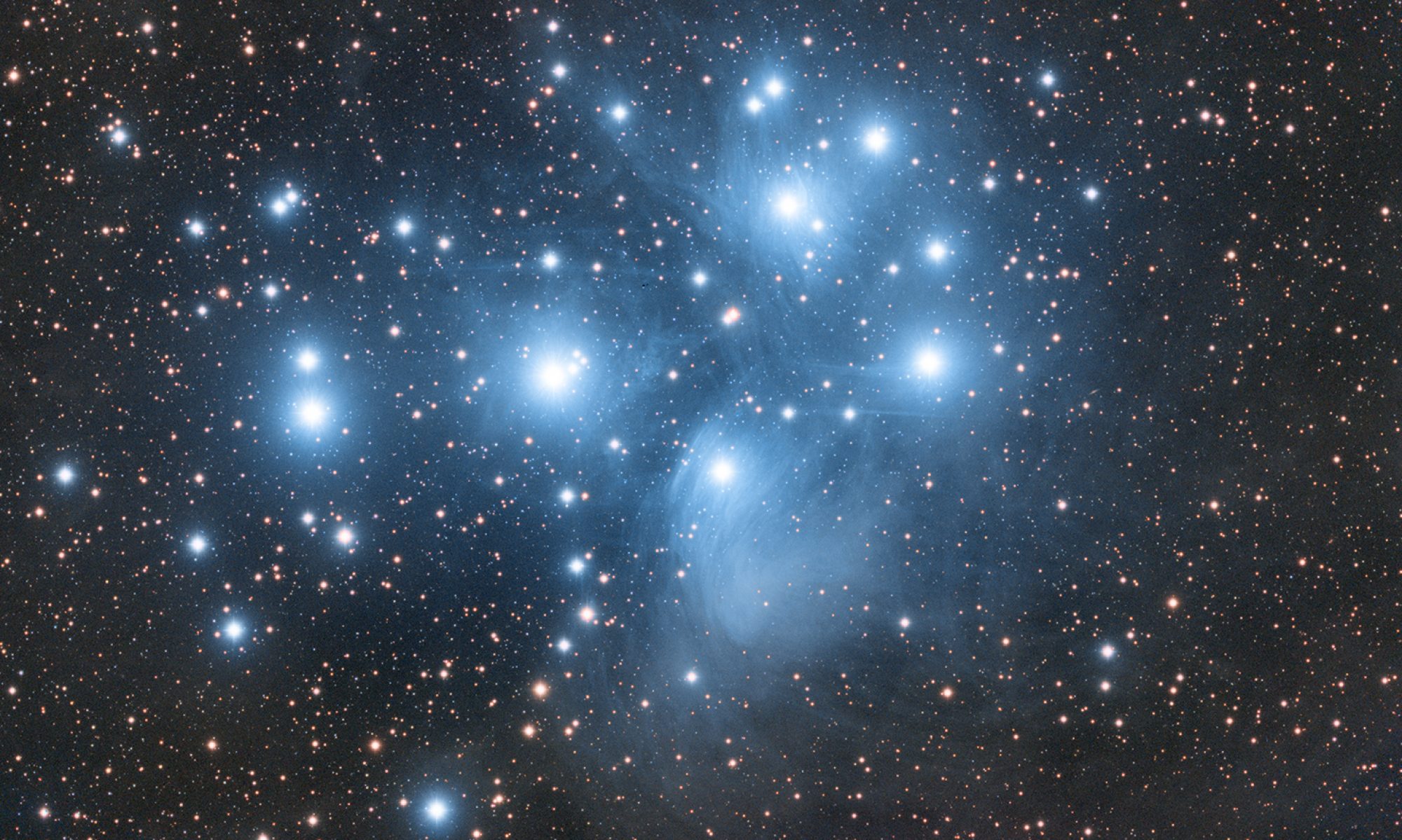
Here are some examples, without any denoise so you can see what's going on.


Now, I'm probably still going to invest in APP because I've just started doing some Ha work and it beats DSS hands-down for that. But, I would kind of like APP to do much better at RGB work than DSS too, especially given the price, and given the amount of time it takes to process.
Is there anything I might be doing that is really badly wrong here, or some button or switch or tick box I should be looking at? Or is this really just a reflection of the limitation of my gear/technique?
Thanks, Brendan
The difficulty with comparing different packages is that they all have different algorithms. A lot will also depend on how you stretch etc. In this case it might be that your data is already very good, combined with it being not overly complex and then the differences will be in the details/noise etc. It won't always be day and night. However, I do know that APP has very advanced calibration algorithms that are simply better, it allows for much better light pollution correction later on, making seamless mosaics, etc.
Thanks Vincent. I have since done more comparisons and I can see that the stars are tighter with APP than with DSS. Also, it's very much better for Ha data, so I've decided to invest in a year's rental. 🙂
Very much appreciated Brendan! I hope you'll find it works nice for more complex datasets as well. If you have any questions, always happy to help. A new release with quite a few improvements is close as well.
