I have had a very rough 2 months unfortunately health wise. I was struck 3x in a row with bacterial infections. The second infection occurred after a routine hospital checkup and I became very sick. I had to rest and take a lot of antibiotics. Once I was recovering and restarting work 1 month ago, I again became sick. The infection was not yet gone, so even more antibiotics and rest was needed. Needless to say, it took a lot of my energy and I needed a lot of rest.
Finally, the infection is really gone and my energy is coming back step-by-step now and I have started work again. I am terribly sorry to have kept you waiting for support. I will address all outstanding questions and e-mails step-by step and will be on the forum daily from today.
APP 2.0.0-beta47 will come soon as well, a lot of work was already completed before I became very ill, so the release is also nearly ready for you. Beta47 will be much faster actually. Many workflows will be more than 2x faster, mosaics can even be 10x faster than before because registration really received a major boost... all compared to beta46. Before I release it, I will make sure that everything is working properly and then I will release it.
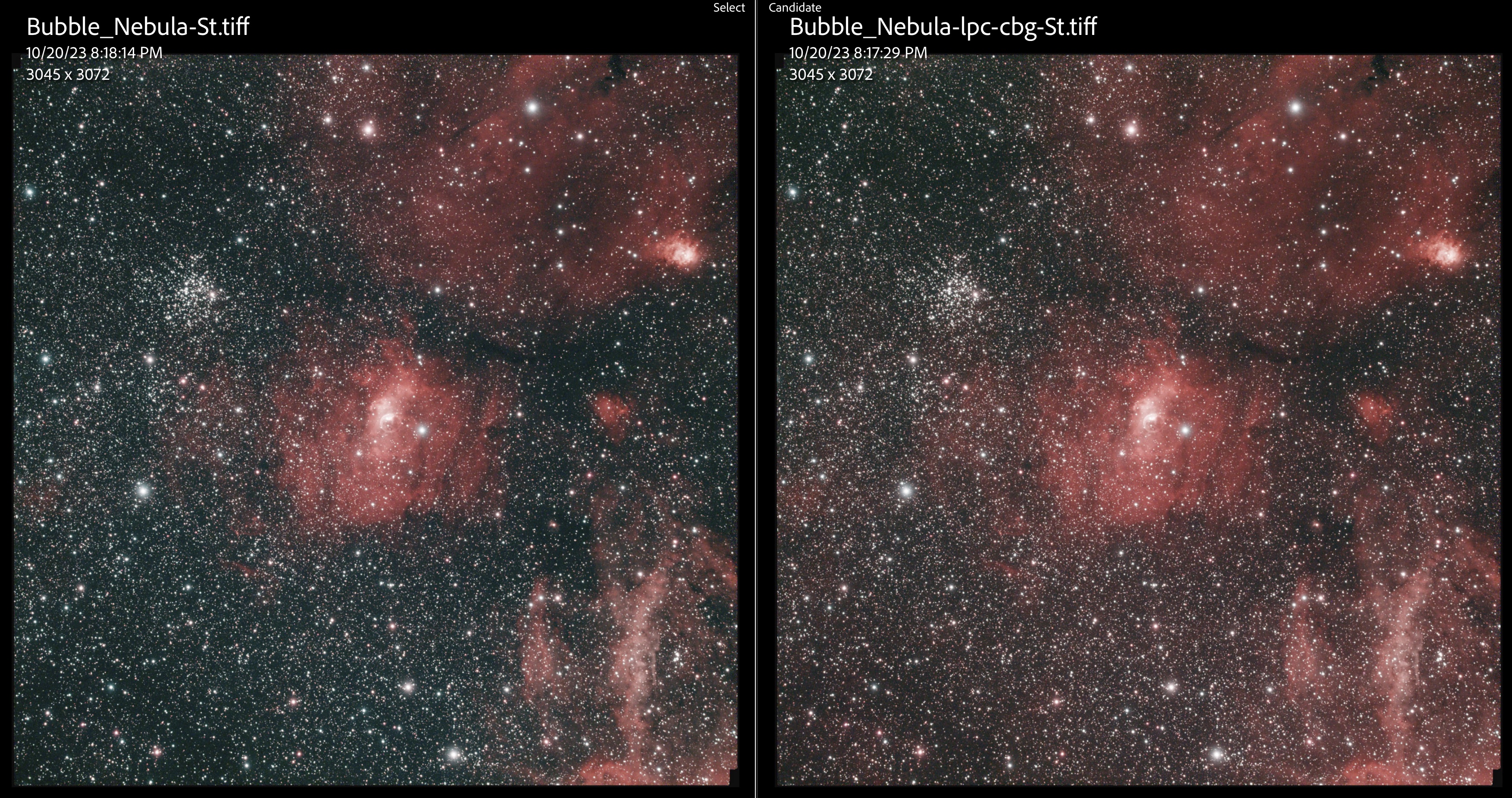
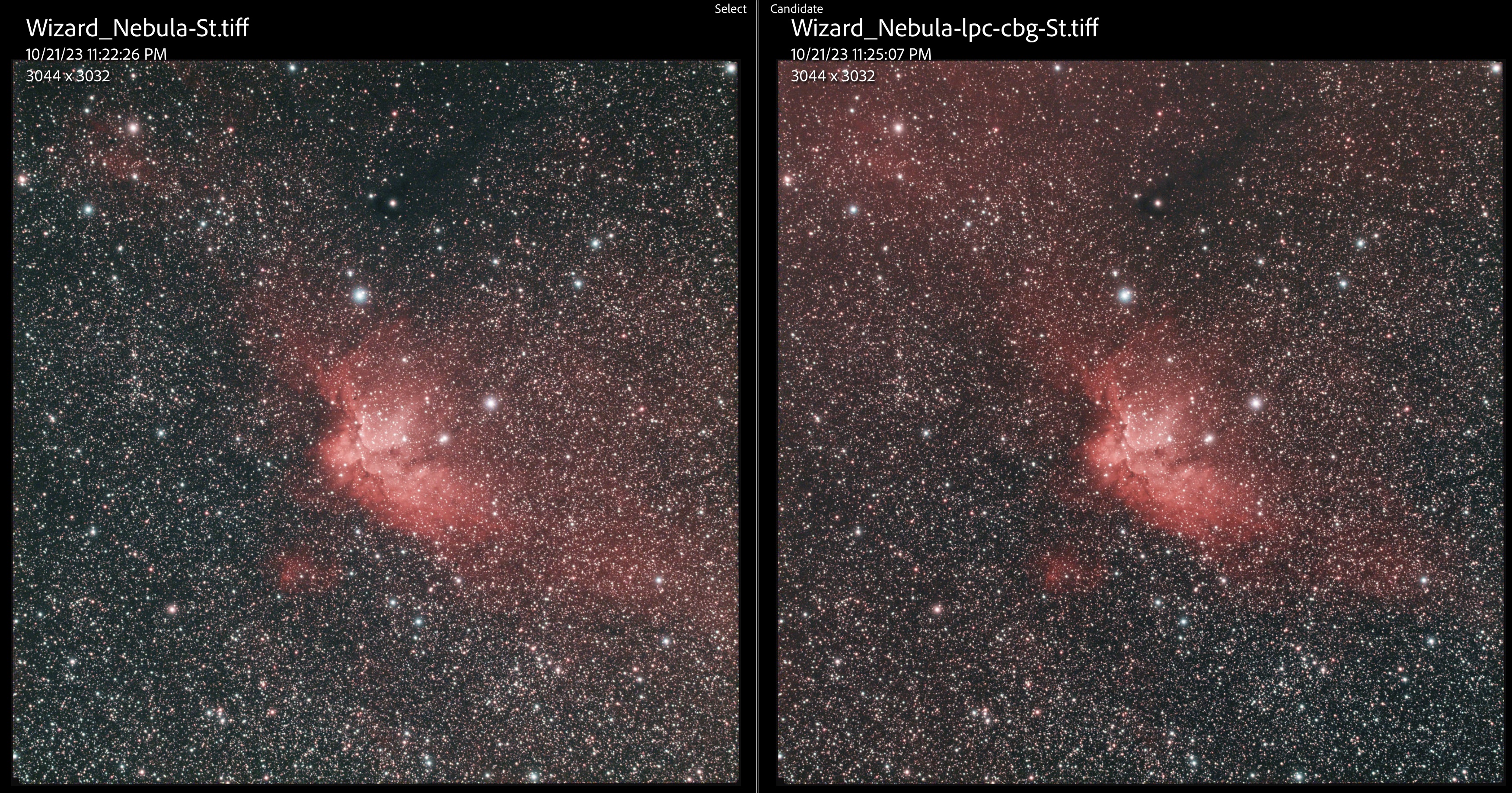
I used to swear by the lpc-cbg step. Now when I apply it to my newly-acquired ZWO Duoband filter (HA and OIII) imagery it's doing weird stuff. Here are two examples of nebula taken with this filter. In both, the left frame is the original, post integration/stretch. The right one is after the LPC-cbg step. Based on other pictures I've seen, I believe the pre-LPC versions are more representative. In each case one quarter of the picture is turning red. Is this a natural result of this type of narrowband image where it seems to be correcting the "lack" of red in the otherwise normal areas?
I used to swear by the lpc-cbg step. Now when I apply it to my newly-acquired ZWO Duoband filter (HA and OIII) imagery it's doing weird stuff. Here are two examples of nebula taken with this filter. In both, the left frame is the original, post integration/stretch. The right one is after the LPC-cbg step. Based on other pictures I've seen, I believe the pre-LPC versions are more representative. In each case one quarter of the picture is turning red. Is this a natural result of this type of narrowband image where it seems to be correcting the "lack" of red in the otherwise normal areas?
@roscoed, this actually shows that there is more nebulosity in your data than most users show in their images. This happens a lot with h-alpha nebula that have weak nebulosity extending further away. The background calibration (the -cbg part) is responsible for showing how much nebulosity there actual is in the data. If you perform Remove Light Pollution correctly, H-alpha signal is not created out of the blue 😉 But if you misperform Remove Light Pollution, then weird gradients can occur but these can be red/green/blue, not just red normally. Maybe you need to redo the Remove Light pollution and place the area select boxes differently? If the outcome is the same, than it makes it more likely that the H-alpha signal is there.