
2026-10-09 APP 2.0.0-beta48 has been released !
This is mainly a bug fix release for the reported bugs in beta47. In addition it has a significant User Interface performance improvement noticable when you need to process 1000s of images in APP.
2026-10-03 APP 2.0.0-beta47 has been released !
This is a very big release... many code optimizations/rewrites, many parts of APP are much faster and more precise, especially star analysis and registration are much faster ! Big mosaics will go much faster 🙂
And we introduce a new preview filter, which includes the new Adaptive Deep Sky Stretch and a General Levels Stretch, this has been long over due. The old preview filter (the panel on the right side to stretch and preview your data) has not been updated for a couple of years and it is a critical part of any APP session.
Adaptive Deep Sky Stretch or ADSS is a much more intuitive stretch algorithm. It is also color preserving (which is a great new addition in itself ! ) which means that the highlights are no longer bleached, color is maintained from the linear data while stretching. You can simply stretch your data using the sky background level and signal width sliders which work much easier and more intuitive. You no longer need to fiddle with the old complicated sliders with zoom buttons. All the zoom buttons for the sliders are made redundant. And you can enter slider values in the slider value fields yourself. I will make a youtube video in the coming days to explain and fully introduce ADSS. Once the video is ready, it will be highlighted on the forum.
RGB Combine upgrade !. The RGB Combine Tool has been rewritten mostly. The tool is faster and easier to use and most importantly, the Luminance slider to inject a luminance channel or channels into the RGB composite is now working correctly. It no longer bleaches the RGB colors. Combined with the new ADSS preview, you will get much better and easier great composites with great color! I will also explain this in a new youtube video.
Hi All,
I'm about to use my 12nm HA filter tonite.
Just going to do HA in this session.
Do I just treat the subs as normal but select the correct box and add all the supporting files.
Just want to get the HA data ready for the RGB when the moon is not out.
Many Thanks
Paul
@paul-grace Hi Paul,
Do I just treat the subs as normal but select the correct box and add all the supporting files.
What box do you mean?
If your software writes the filter name to the FITS header then APP will detect itself that you have used an Ha filter. Otherwise when the popup comes you need to select it manually. Is that what you meant?
Apart from that, the processing steps will be the same as for any other data.
Wouter
Many thanks for the quick and great reply..exactly what I needed:)
This tick box....

Ah...so it didnt work 🙁
I selected Ha for the lights with the Ha filter subs and RGB for all the supporting files...was this wrong?
Edit:
The supporting files were not created using the Ha filter.
Do I need to create some with the Ha filter?

wot a fool..ofcourse theres less light with the filter so any files used not taken with the filter will show the issue on my pic DOH...bloody obvious when you put your brain in gear
New files being taken now...so glad I bought the ASI 183Mc Pro
Hi All,
Back again 🙂
I've now created all the supprting files with the 12nm Ha filter in line.
When selecting the files to load do I tick Ha or rgb?
I'm guessing Ha as the filter is was used.
Many Thanks
Paul

Ok..added all the files and selected Ha but the pic is now monochrome???
Should I have selected RGB for the flats, darks etc?

Ok...this is with all the files taken with the Ha filter in
Lights I selected Ha and darks, flats bias were selected RGB.
Colour is now back but so is the mess.
What am I doing wrong?
All new darks, flats and bia in and all at the same focus and temp/
If you are taking and processing only Ha data in this session, with an One Shot colour camera,
then you should be selecting Ha extract in the Tab0 Algorithm drop down, and all files , image and calibration should be loaded as Ha.
You should expect a monochrome file at the end, as you are creating a file from a single channel on the colour chip.
After imaging RGB data later on, you will load the Ha as Ha in the RGB Combine module, and the RGB as the three red, green and blue channels, and using the HaRGB algorithm in the combine module.
That is how i would process this.
Many Thanks Andy
I'll do it now with 5 of each files to save a bit of time 🙂
🙂
Great progress
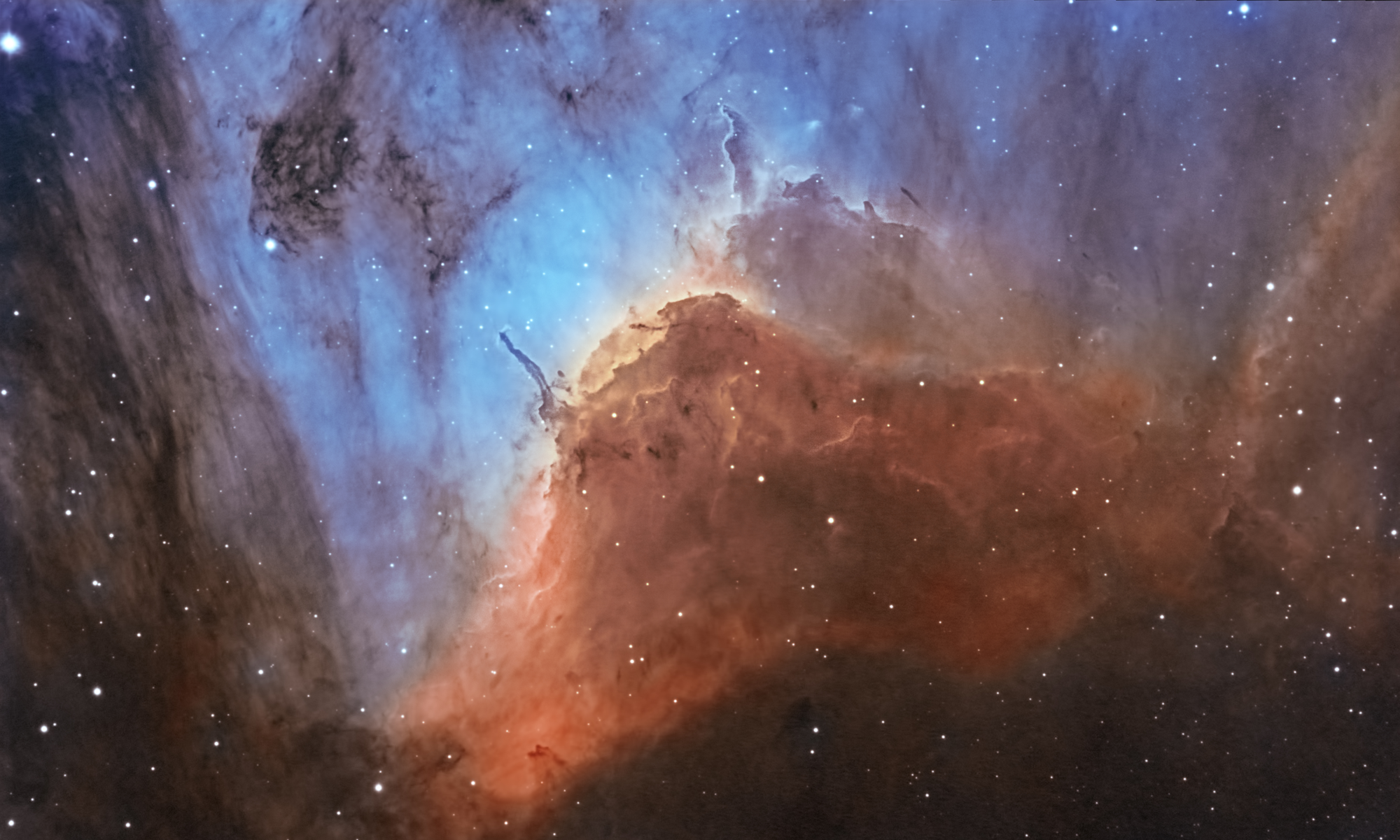
This is 5 subs and supporting docs as done with Andy's advice 🙂
Now to do the full stack which includes a flip about 15 subs into the session..
here goes.
Be Right back 🙂

THANK YOU Wouter & Andy.
Just a simple thing but if you dont know you dont know 🙂
I'm very very happy with the result and was getting nowhere until you both helped
THANK YOU both again 🙂

@paul-grace glad to help. Thats a great result! Well done!
i did exactly the same routine on the same object.
the Ha provides the detail and the RGB the colour.
Its a great combo for this type of object that is Ha rich.


