
UPDATE FROM MABULA
I have had a very rough 2 months unfortunately health wise. I was struck 3x in a row with bacterial infections. The second infection occurred after a routine hospital checkup and I became very sick. I had to rest and take a lot of antibiotics. Once I was recovering and restarting work 1 month ago, I again became sick. The infection was not yet gone, so even more antibiotics and rest was needed. Needless to say, it took a lot of my energy and I needed a lot of rest.
Finally, the infection is really gone and my energy is coming back step-by-step now and I have started work again. I am terribly sorry to have kept you waiting for support. I will address all outstanding questions and e-mails step-by step and will be on the forum daily from today.
APP 2.0.0-beta47 will come soon as well, a lot of work was already completed before I became very ill, so the release is also nearly ready for you. Beta47 will be much faster actually. Many workflows will be more than 2x faster, mosaics can even be 10x faster than before because registration really received a major boost... all compared to beta46. Before I release it, I will make sure that everything is working properly and then I will release it.
APP threw this error at the end of each of the Calibration, Analyse, Register, Normalize, and Integrate routines (at the same time as the gong). After Integration, there were no master L, Ha, RGB frames created (at least where I could find).
Encountered error in module:
CreateMasterFlatTask
Error message:
java.lang.NullPointerException
Cause:
null
cX.a(Unknown Source)
cX.doInBackground(Unknown Source)
javax.swing.SwingWorker$1.call(SwingWorker.java:295)
java.util.concurrent.FutureTask.run(FutureTask.java:266)
===
Is this something I did? Why did it throw the error. There were a lot of large files to process. Where are the master frames for the light frames created?
Thanks,
Gerald
I maybe tried to have APP do too much. I went back and did Lum and RGB separately. No problem there. Learning as I go.
GM
Yes, you found the correct solution already. This is due to the mixing of mono and RGB which APP doesn't support yet. We do want to make this much easier and not just give a null pointer error. Best is to split the RGB into mono, R, G and B and the register those frames with the luminance.
Ok, but I still have a problem. My L frames and RGB raw frames are the same size, taken with the same scope and optics and orientation bit different GAIN settings (if that is important). If I process separately, how do I register the L and RGB frames to match up before combining as LRGB? When I tried, the L and RGB came out with different dimensions as well.
Thanks-still learning.
Gerald
@gmillerok1 Once L and RGB have finished their integration, you can clean the file list by clicking the Clean button at the bottom of tab 1. Then you can load the integrated L and RGB files as lights (don't load calibration files and indicate that you're sure when asked by APP) and then go to tab 4 and click the register button. Once done click the Save Registered Frames button. You can then load those registered frames in Combine RGB.
Unfortunately, I was not able to register with the L frame. I cropped them as well to the same dimensions because for some reason the L and RGB dimensions change after integration even though they are the same. I wonder if the different GAIN setting is the issue. But registration with the L frame will simply not succeed. I tried different settings/projections. Nothing worked. At this point, I don't know what else to try. PI registered them without any issue. I guess I can use PI to register but I'd sure like to get away from PI. That's why I bought APP.
Gerald
@gmillerok1 Can you please upload the L and RGB integrated images to
https://upload.astropixelprocessor.com/
in a new directory called gmillerok1_registration? As always, use upload for both username and password (your APP credentials will not work). Let me know here as soon as the upload has finished and I will have a look at your data. Thanks!
Thank you so much. Files have been uploaded.
Had a go as well, I upped the amount of stars for star analysis to 1000 and set these parameters in the register module;

Then I normalized all frames as well and saved the normalized frames in tab 5, which I then used in the combineRGB tool.
I used these settings, coming from the LHaRGB1 preset and changing those a bit (I also set the multiplier from 2 to 1 for the red channel);

There's quite the amount of color gradients in the data, so that took a bit of careful light pollution correction;

With that done, I proceeded to star color correction. This is tricky when using filters, but worked pretty nicely here;

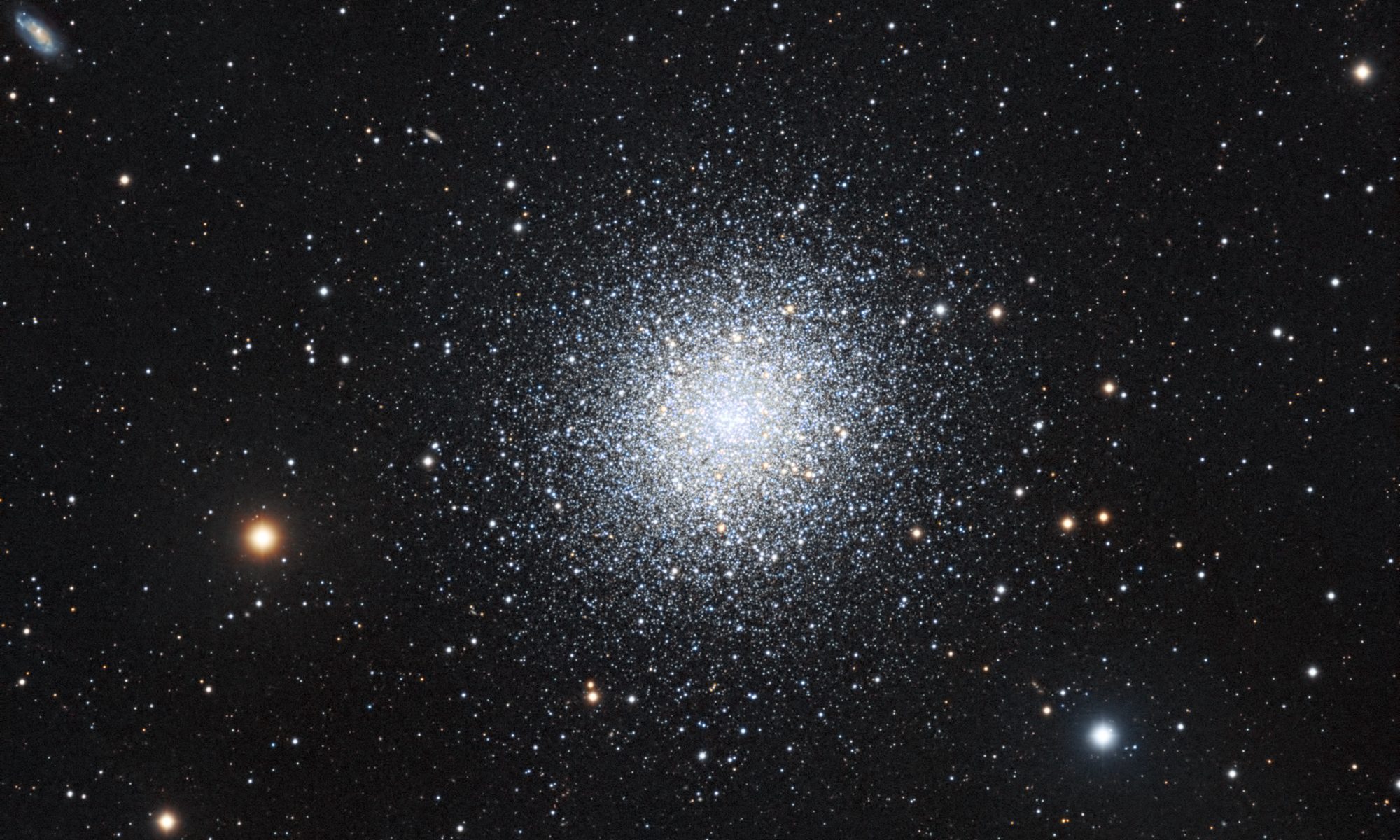
Which resulted in this;

Which I think is a really nice one. 🙂
Thank you again. I was able duplicate those efforts for registration where APP was not able to do so before with those parameters.
I had previously tried to increase the number of stars but this had not worked. I presume it was that value as well as the parameters in registration that caused APP to fail at registration before.
Registration was the only issue I ran into but thanks for taking it to the end-now I have something to duplicate as part of the learning process with APP.
Is there any way to make a HDR image using shorter exposure frames? I have some 30 second exposures I want to use to bring out the core a bit better.
Thanks again for you much needed assistance to help me with APP. I can not express my appreciation enough.
Gerald
Is there any way to make a HDR image using shorter exposure frames? I have some 30 second exposures I want to use to bring out the core a bit better.
Unfortunately this is not possible yet in APP but it is on the TODO list to be added.
