
2026-10-09 APP 2.0.0-beta48 has been released !
This is mainly a bug fix release for the reported bugs in beta47. In addition it has a significant User Interface performance improvement noticable when you need to process 1000s of images in APP.
2026-10-03 APP 2.0.0-beta47 has been released !
This is a very big release... many code optimizations/rewrites, many parts of APP are much faster and more precise, especially star analysis and registration are much faster ! Big mosaics will go much faster 🙂
And we introduce a new preview filter, which includes the new Adaptive Deep Sky Stretch and a General Levels Stretch, this has been long over due. The old preview filter (the panel on the right side to stretch and preview your data) has not been updated for a couple of years and it is a critical part of any APP session.
Adaptive Deep Sky Stretch or ADSS is a much more intuitive stretch algorithm. It is also color preserving (which is a great new addition in itself ! ) which means that the highlights are no longer bleached, color is maintained from the linear data while stretching. You can simply stretch your data using the sky background level and signal width sliders which work much easier and more intuitive. You no longer need to fiddle with the old complicated sliders with zoom buttons. All the zoom buttons for the sliders are made redundant. And you can enter slider values in the slider value fields yourself. I will make a youtube video in the coming days to explain and fully introduce ADSS. Once the video is ready, it will be highlighted on the forum.
RGB Combine upgrade !. The RGB Combine Tool has been rewritten mostly. The tool is faster and easier to use and most importantly, the Luminance slider to inject a luminance channel or channels into the RGB composite is now working correctly. It no longer bleaches the RGB colors. Combined with the new ADSS preview, you will get much better and easier great composites with great color! I will also explain this in a new youtube video.
Hi Mabula,
I have a sequence of lights, darks, flats, bias frames taken with an ASI 294 colour camera and load them into APP.
I go though the calibration steps in Step 2 to create master flats, darks bias frames.
I then check to see how an individual light frame will be processed and the result is unexpected. It looks to me that the flat does not have the correct exposure, however in the capture programme, I captured till the histogram was just in the middle? Is the problem the flat is not exposed correctly?
Thanks
Calibrated light

result of integration

master flat
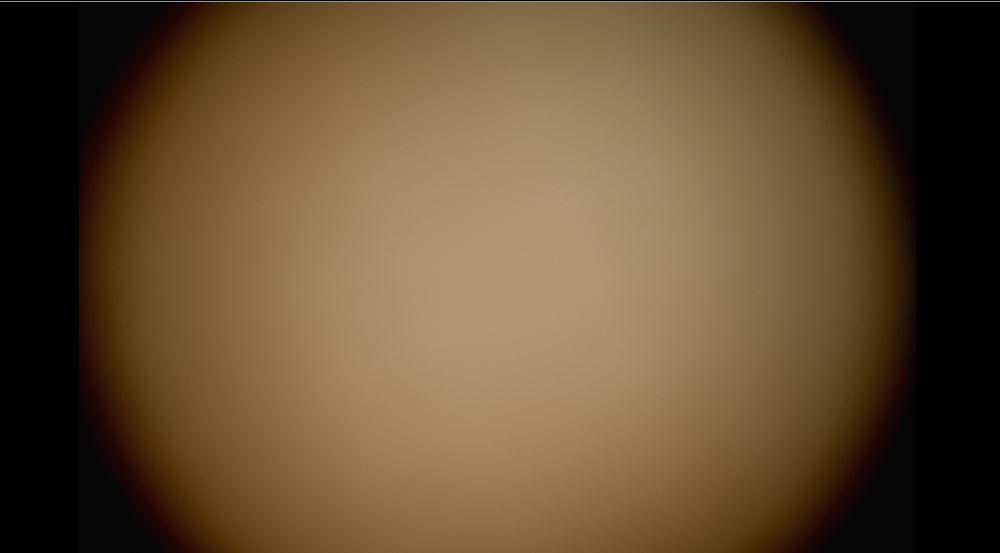
uncalibrated light

Hi Phil @philsav8,
In which APP version was this? in APP 1.061?
Did you create the master frames in APP 1.061?
Perhaps you can share your master frames so we can have a look why it's not working as expected?
Kind regards,
Mabula
Hi Mabula,
I redid the processing but this time with 10 lights, darks, flats, bias frames and still the same issue with the flats. I think I could be missing a step/setting?. I basically run through the tabs 0-6
This was done in APP 1.061.
I have uploaded the master flat/dar/bias frames plus some lights to Google Drive:
https://drive.google.com/drive/folders/1o6KTpieYqcr35DhfcIKWdUeytsKCLWEp?usp=sharing
thanks Phil
Hi Phil @philsav8,
Thank you for sharing your data.
I have downloaded the data and I think I know what the source problem is. But... it's best if you can provide more information on your data:
In your initial post, you state that the data is from a ASI 294 colour camera.
So I would expect your light frames to be FITS frames in 16bits. They are 8bits TIFFs now and even compressed with LZW, that really will not be a good starting point.
https://astronomy-imaging-camera.com/product/asi294mc-color
The camera has a14bit ADC, so by storing at only 8bits (and compressed) a lot of information is lost. You should try to save the captured data in 16bits and uncompressed, preferably in FITS. (but TIFF should work as well)
Do you have original FITS frames? Or can you share how you captured your data, what capture software did you use?
Were the masters created from 8bits TIFFs as well? (it does seem so, because the masters are 8bit as well).
In the meantime, I will have a look at what I can get out of the data that you provided 😉
Mabula
This is a screenshot of the masterdark with it's histogram.


Both the Masterdark and MasterBias masters are very important for flat calibration to work well. Without a good Masterbias or Masterdark or both, flat calibration is doomed to fail.
Clearly, these frames are not suitable at all to be used as Masters. This has to do with the data being only
- 8bits instead of 16bits.
The LZW compression shouldn't be a problem, since it's lossless, (but I still wouldn't use it then I think)
The 8bits has reduced the original bitdepth with a factor of 14bits - 8bits = 6bits = 2^6 = 64x.
That means that all data values between 0 and 64 in your original data are either 0 or 1 now or
That means that all data values between 64 and 128 in your original data are either 1 or 2 now etc....
This has a great destructuve effect on the quality of your calibration masters, there is severe posterization in the masterframes and valuable information is lost which is needed for calibration.
So this will only work with your camera if you capture the data in 16bits and use that in calibration 😉
Mabula
Hi Mabula,
I understand my mistake, totally my fault. I have just started using SharpCap to acquire the images (as well as a new scope) and to keep things simple and to ensure I could see the captured images easily to check focus etc on my laptop while acquiring, I saved as jpg. Never again 😀 The error with the flats makes perfect sense as well. I w=ondered why there was such posterization.
Thanks for your help in pointing me in the right direction
Phil
Hi Phil @philsav8,
No problem 😉 Yes, especially JPGs are terrible. This is because the JPG compression algorithm is very destructive in low light areas, almost all data will simply be gone....
So save your captures in 16bits Fits, I assume Sharpcap can do that and then all should be fine 😉
Mabula
