
May 27 2026 APP 2.0.0-beta45 has been released !
Fully Multi-Threaded LNC, many improvements for the registration engine, platform upgrade, and further tuning of internal memory consumption and memory release back to OS.
Apr 14 2026: Google Pay, Apple Pay & WeChat Pay added as payment options
Update on the 2.0.0 release & the full manual
We are getting close to the 2.0.0 stable release and the full manual. The manual will soon become available on the website and also in PDF format. Both versions will be identical and once released, will start to follow the APP release cycle and thus will stay up-to-date to the latest APP version.
Once 2.0.0 is released, the price for APP will increase. Owner's license holders will not need to pay an upgrade fee to use 2.0.0, neither do Renter's license holders.
I’m unable to fathom this one. I’ve used APP in normal and mosaic mode for over a year but the results for this session have me confused.
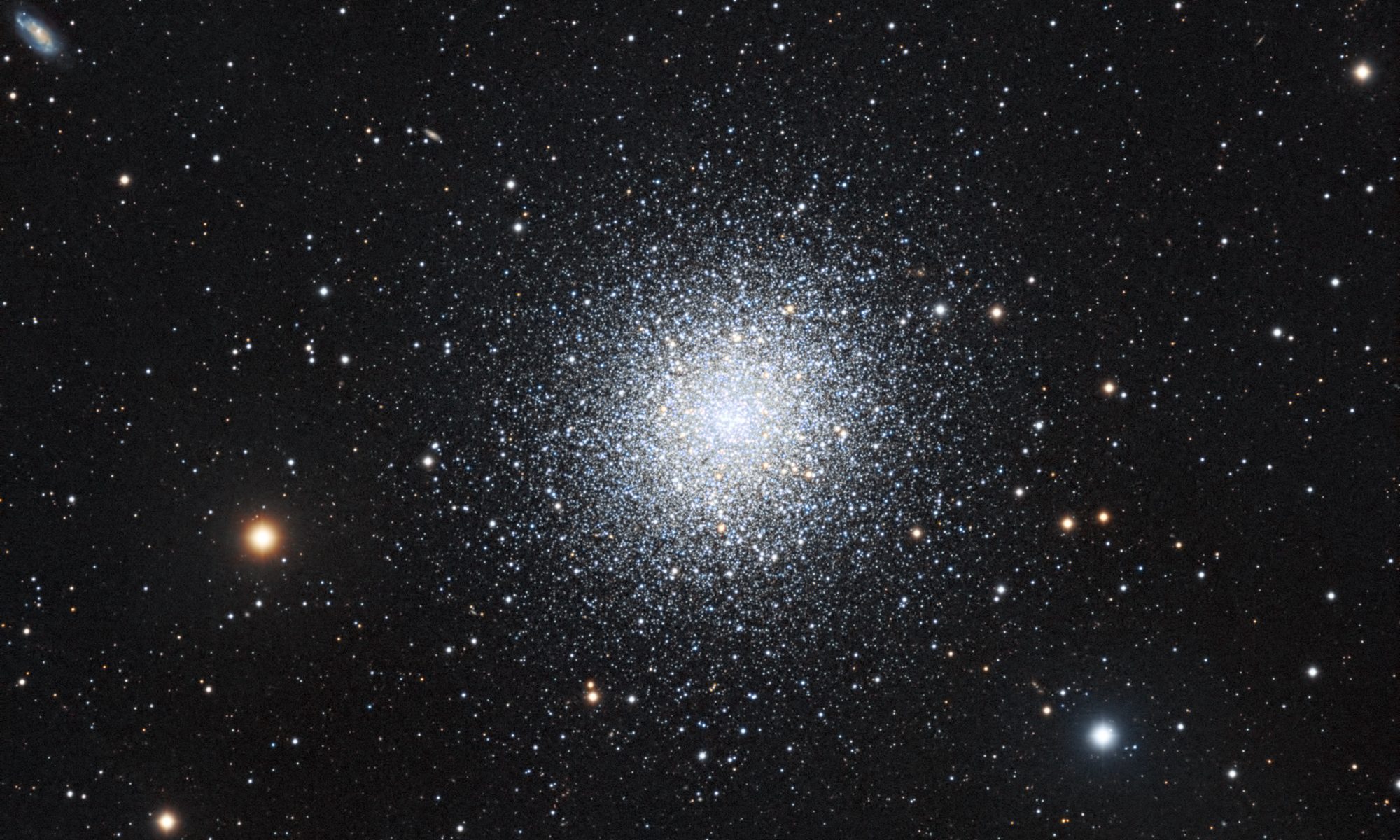
Two nights capture of M101 with a ASI183MC camera. It has bad read noise so darks are essential.
First night I took 120x120s subs for lights. Second night I took 180x120s subs for lights plus 20 Flats, 20 Bias and 25 Darks. All at the same 0 degrees C.
Both nights had Meridian Flips at some point.
Stacking in APP (and in Affinity Photo) gives dark areas on both sides of the image at about where the read noise would be. As Affinity gives the same result I’m sure it’s not APP that’s the problem here.
My reasoning (likely now shown to be faulty) is that using the same gear without any changes to the image train over the two nights should allow me to capture Flats/Darks/Bias on the second night and use them for both sessions in APP.
Can anyone see where this is going wrong please ? I’ll attach a stacked image.

Damian
These problem areas look exactly like the amp glow affected areas on the sensor used in the ASI183, mirrored on both sides because of the meridian flip. The only other thing I can think of is a physical obstruction on the camera side of the optical train. But is seems much more likely to be amp glow.
That means your masterdark has a problem. The masterflat seems to have worked ok, so your flats and bias are probably fine. Are you sure that the temperature matched on your lights and darks ? I haven't used a camera with amp glow for years, but it may be that the amp glow its not linear with temperature. A friend of mine forgot to turn on the camera cooling for just one session and the results were unusable.
The other possibilty is an offset problem. The gain and offset must match across the lights, flats, bias and darks. Also the offset must be high enough to eliminate any low side clipping during processing. I checked my old notes on the 183, and the recommended offset varies with the chosen gain, starting with offset 5 for gain 0, going to offset 50 for gain 300. Too high is better than too low, but risks losing faint data.
There is no problem with reusing calibration frames across multiple sessions if the optical train is unchanged. I will often use the same masterflats and masterdarks for months at a time, until I change scopes or get a new piece of dust somewhere.
JC
Thanks John - very much appreciated.
I took the darks separately and I believed they were at the same temperature but I’ll do them again and see.
Also thanks for confirming the overall process.
You nailed it John.
I set up to take the darks again and although the temperature was right, the duration wasn’t. Lights taken at 120s but darks at 180s !
Retaking at 120s.
Thanks so much for the pointers 🙂
Glad you sorted it out. Too long an exposure time for the darks makes perfect sense. I didn't mention that possibility because I thought APP provided a warning when the exposure times didn't match. Perhaps my recollection is wrong about that.
By the way - your raw stack looks really good.
JC
Thanks John.
First stab at processing it in PI (even with the wrong darks) is here -> https://www.flickr.com/photos/190967859@N06/54490273499/in/datetaken-public/
I hope posting links is allowed.
Also I enabled the additional objects in the filenames so gain/temp/exposure is obvious now.
Hi @skysnapper and @connor231,
Thank you Damian for posting your issue and welcome to the forum as well !
Indeed, John nailed this one, thanks! It is darks not being compatible with the lights to be able to remove the amplifier glow/amp-glow which is a non-linear signal. So you need exposures, gain, offset and temperature to match to get fully rid of it. In this case, clearly the darks over-corrected because they were exposed too long creating that black areas...
Mabula
Thanks John.
First stab at processing it in PI (even with the wrong darks) is here -> https://www.flickr.com/photos/190967859@N06/54490273499/in/datetaken-public/
I hope posting links is allowed.
Also I enabled the additional objects in the filenames so gain/temp/exposure is obvious now.
Nice result Damian, thanks for posting !
