46 panel Milky Way ...
 
Share:
Notifications
Clear all

MAY 4 2026: APP 2.0.0-beta44 has been released !

New improved internal memory controls should now work on all computers

May 1 2026: APP 2.0.0-beta43 has been released !

Improved internal memory controls (much more stable and faster on big datasets), fixed CPU image viewer, fixed Narrowband extraction demosaic algortihms.

Apr 29 2026 APP 2.0.0-beta42 has been released !

New improved Normalization engine, Fixed random crashes in integration, fixed RGB Combine & Calibrate Star Colors, fixed Narrowband extraction algorithms, new development platform with performance gains, bug fixes in the tools, etc...

Apr 14 2026: Google Pay, Apple Pay & WeChat Pay added as payment options

Update on the 2.0.0 release & the full manual

We are getting close to the 2.0.0 stable release and the full manual. The manual will soon become available on the website and also in PDF format. Both versions will be identical and once released, will start to follow the APP release cycle and thus will stay up-to-date to the latest APP version.

Once 2.0.0 is released, the price for APP will increase. Owner's license holders will not need to pay an upgrade fee to use 2.0.0, neither do Renter's license holders.


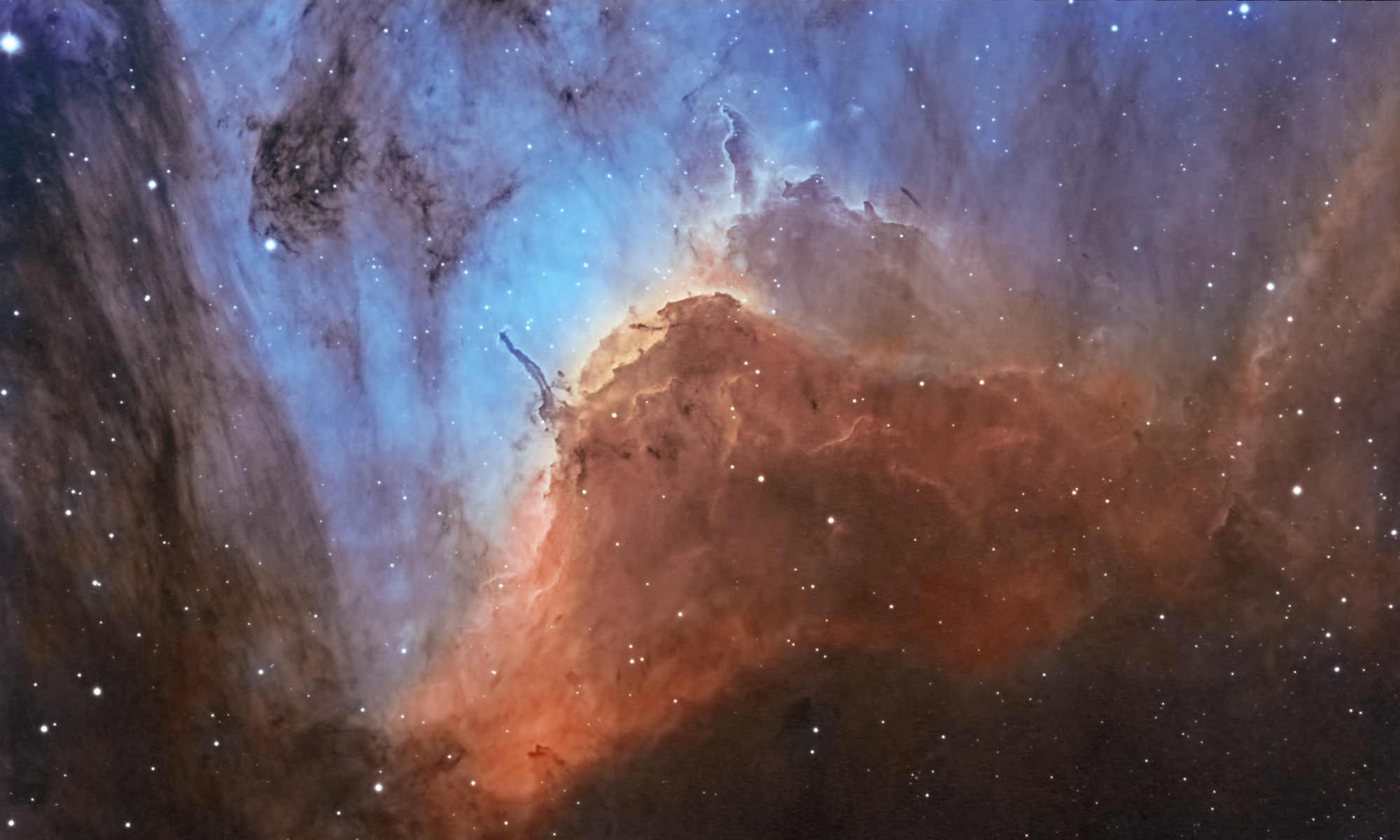
46 panel Milky Way Panorama

6 Posts
3 Users
4 Reactions
1,983 Views
(@kelvin-hennessy)
Neutron Star
Joined: 8 years ago
Posts: 73
Topic starter  
I have been working on this high resolution panorama of the Milky Way for 5 months - by far my biggest astrophotography project to date. As a bonus I managed to catch Comet C/2017 K2 Panstarrs as it passed near the Blue Horsehead nebula.
It consists of 46 separate RGB image panels using my dual camera arrangement (CentralDS Canon 6D & Sigma 85mm F/1.4 and ASI294MC Pro & Sigma 40mm F/1.4) plus an addition 4 panels of Hydrogen Alpha taken with my ASI294MM Pro & 40mm - over 34 hours of integration time in total
 
Each of the 46 panels was first  integrated in two sessions in APP, then all 46 registered in APP using Mercator Projection with one of the central panes as the reference.  I had "analyse stars" set to 2000, MBB=20, LNC Level 2 5 iterations.  The many trial integration runs each took 4 hours on an overclocked AMD Ryzen 5900X / 64GB RAM / 1GB Pcie Nvme SSD / GeForce RTX2060 Super
 
The resultant FITS file was 6.2 terabytes in size with a resolution of  33748 x 15840
 
I have also included an early trial run image without blending. 
 
To see the  higher resolution version and more technical information please visit my astrobin page - for an even more detailed version you can click on the "Full Resolution" link at the top right.


Milky Way from Carina to North America
Milky Way Early Trial


artem, Laura Ngo, Steven Barnes and 1 people reacted
ReplyQuote
(@Anonymous 174)
Joined: 9 years ago
Posts: 5702
 

Well that is absolutely fantastic! I immediately showed it to my wife. 🙂 Well done, did you use the later version of APP?


ReplyQuote
(@kelvin-hennessy)
Neutron Star
Joined: 8 years ago
Posts: 73
Topic starter  
Posted by: @vincent-mod

Well that is absolutely fantastic! I immediately showed it to my wife. 🙂 Well done, did you use the later version of APP?

Thank you so much Vincent.  Yes I used  version 2 beta 4.   The Star reduction module crashed the software - but dont worry this file crashed or locked up at least 3 other  programs too !


ReplyQuote
(@kelvin-hennessy)
Neutron Star
Joined: 8 years ago
Posts: 73
Topic starter  

@vincent-mod my panorama made Astrobin Image of the Day today 😀 

It also made the NASA APOD shortlist, getting featured on their "Sky" facebook page and attracting a lot of attention.

Good advertising for APP !


ReplyQuote
(@Anonymous 174)
Joined: 9 years ago
Posts: 5702
 

That is very cool, congratulations! I already saw it was a contender indeed. 🙂


ReplyQuote
(@stastro)
Black Hole Moderator
Joined: 7 years ago
Posts: 257
 

Wow, I know how long it took to process 6x62mpx panels, but 46 panels......hats off to you on this one, awesome!!!!


ReplyQuote
Share: