
UPDATE FROM MABULA
I have had a very rough 2 months unfortunately health wise. I was struck 3x in a row with bacterial infections. The second infection occurred after a routine hospital checkup and I became very sick. I had to rest and take a lot of antibiotics. Once I was recovering and restarting work 1 month ago, I again became sick. The infection was not yet gone, so even more antibiotics and rest was needed. Needless to say, it took a lot of my energy and I needed a lot of rest.
Finally, the infection is really gone and my energy is coming back step-by-step now and I have started work again. I am terribly sorry to have kept you waiting for support. I will address all outstanding questions and e-mails step-by step and will be on the forum daily from today.
APP 2.0.0-beta47 will come soon as well, a lot of work was already completed before I became very ill, so the release is also nearly ready for you. Beta47 will be much faster actually. Many workflows will be more than 2x faster, mosaics can even be 10x faster than before because registration really received a major boost... all compared to beta46. Before I release it, I will make sure that everything is working properly and then I will release it.
I am stuck after my initial processing. I see a strong green hue. What do you recommend is my next step in tools with this?

Did you try to use the color calibration tool?
@vincent-mod I have not. To be honest, I don't know how to use it. Is there a tutorial on using that specific tool?
No written one yet, that is for the 2.0 stable version. Here's an older video tutorial though: https://www.astropixelprocessor.com/part-5-star-color-calibration-of-the-mosaic-tutorial-milky-way-to-rho-ophiuchi-by-mabula/
@vincent-mod I am not able to get the green out of the image. I am wondering if someone would be willing to try it and show my the steps they used If I upload the file.
Thank you in advance.
Sure, you can upload the data to our server and I'll check it out, please include calibration files and raw lights:
@vincent-mod file is uploaded and I used your suggestion ofmsamazing-greenResult. I really appreciate your help.
Thank you, would it also be possible to add the original lights and calibration files? I'm suspecting you're using narrowband or use other filters, is that correct?
I tried star color calibration, but this doesn't correct very well which usually is the case with narrowband, this tool is meant for broadband data. With the 1 file I could only get so far;
- I started with mild light pollution correction to both calibrate the background and get it as even as possible;

- Star calibration, starting the tool and drawing 1 or more boxes on areas with no or extremely little nebulosity, for this I stretch the image a lot (30% preset and increase saturation.

Here on the left you can see 2 graphs, the green line shows the model that the stars in the image should follow when you have broadband data. They don't (which points to it not being broadband data), so I tried to change the slope a bit, but that didn't make a big change.
The only thing we then have is called HSL selective color. This is a bit tricky as you want to select the OIII signal in the RGB result. For this you have to set the slider to the values in the following screenshot, this is difficult with the mouse, but you can click once on the slider-ball and then move it with the left-right arrowkeys, this requires experimentation and clicking a few times on "show color selection" where the white is the selected area of the image. We do want to make these tools easier in the future. With the settings in the screenshot you can almost get it:

After that I tweak the color by setting the color selection box to CYAN and the affected area to "background + 3*noise - 75% of range". Then I move the R->CY up a bit to remove some of the red, the G->Ma as well to remove some of the green and the B->Ye lower to add a bit more blue. Then you calculate the adjustments and you have a bit more blue.
I think though that if this is narrowband data, you have some more options with the RGBCombine tool, so if you indeed have this data, please upload that as well.

ps. the reds are now a bit too orange, so not using the star color calibration tool is better. 🙂
@vincent-mod thank you again for your help. I just uploaded the lights and calibration files to the same folder. Yes I used the Triad Ultra Narrowband filter with my color camera.
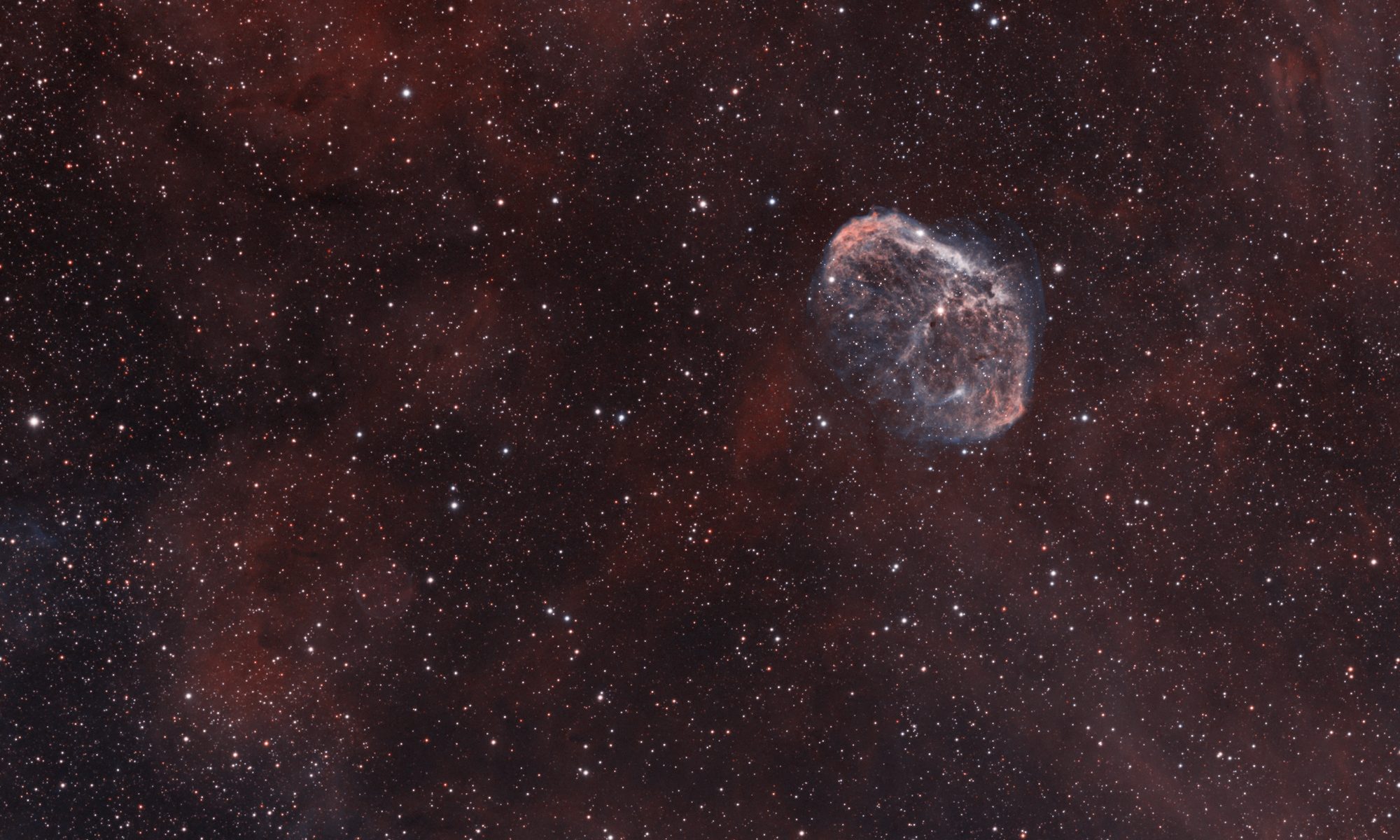
Do you like this result ?

@vincent-mod Yes that is much better. What did you do and where did you start?
Ok great, just wanted to know if that was what you were looking for. 🙂
- As you're using the narrowband filter, I decided to change tab 0 to "extract Ha" as algorithm first.
- Then I loaded the lights and calibration masters and checked those, your masterdark seems to show stars, so I didn't use it, just MB and MF.
- I left everything standard, went to the register tab and registered everything first, just to check if that goes well (otherwise you can go straight to tab 6 and press integrate)
- This resulted in 2 frames not being registered and upon closer inspection I get the idea you may be undersampling?
- I removed those 2 frames and also frames that were above 0.9 in the RMS value (how well it gets registered), you can remove more or use the quality slider as well for this
- The result was an Ha integration. I then immediately went back to tab 0 and selected "extract OIII", it then asks for performing the normalization again and I press yes.
- I get the integrated OIII. I clear all data and load in the Ha and OIII frames, go to tab 5 and press "save normalized frames" so that I'm sure they match properly.
- Then I go to the RGBCombine tool, I start adding channels. I first loaded the Ha file, then I added OIII twice (we need it to be in the green channel as well to construct a RGB image).
- I select HOO1 as formula, press "new formula" and you will see the Ha and OIII populated in the slider section.
- Press to see the result and this is what I posted. You can also do a LP correction on that result just to even out any small gradients you might have.
If you select HOO2 as a formula, you can see a different palette that is also used quite often.
@vincent-mod sorry about the late reply. I got swamped today at work. I just looked at your last post and I have a couple of questions. 1) you mentioned that my Master Darks show stars. Is that normal? I would think they would be dark and not show stars. I covered the camera and put it in a dark room.
2) As you're using the narrowband filter, I decided to change tab 0 to "extract Ha" as algorithm first. Which tool are you using here?
Thanks again for your help.
No worries! I suspected they were stars, I might be mistaken though, I was seeing more like hot areas of pixels instead of just pixels.
I'm not using any tools for the extract Ha setting, it's just a setting in tab 0:

