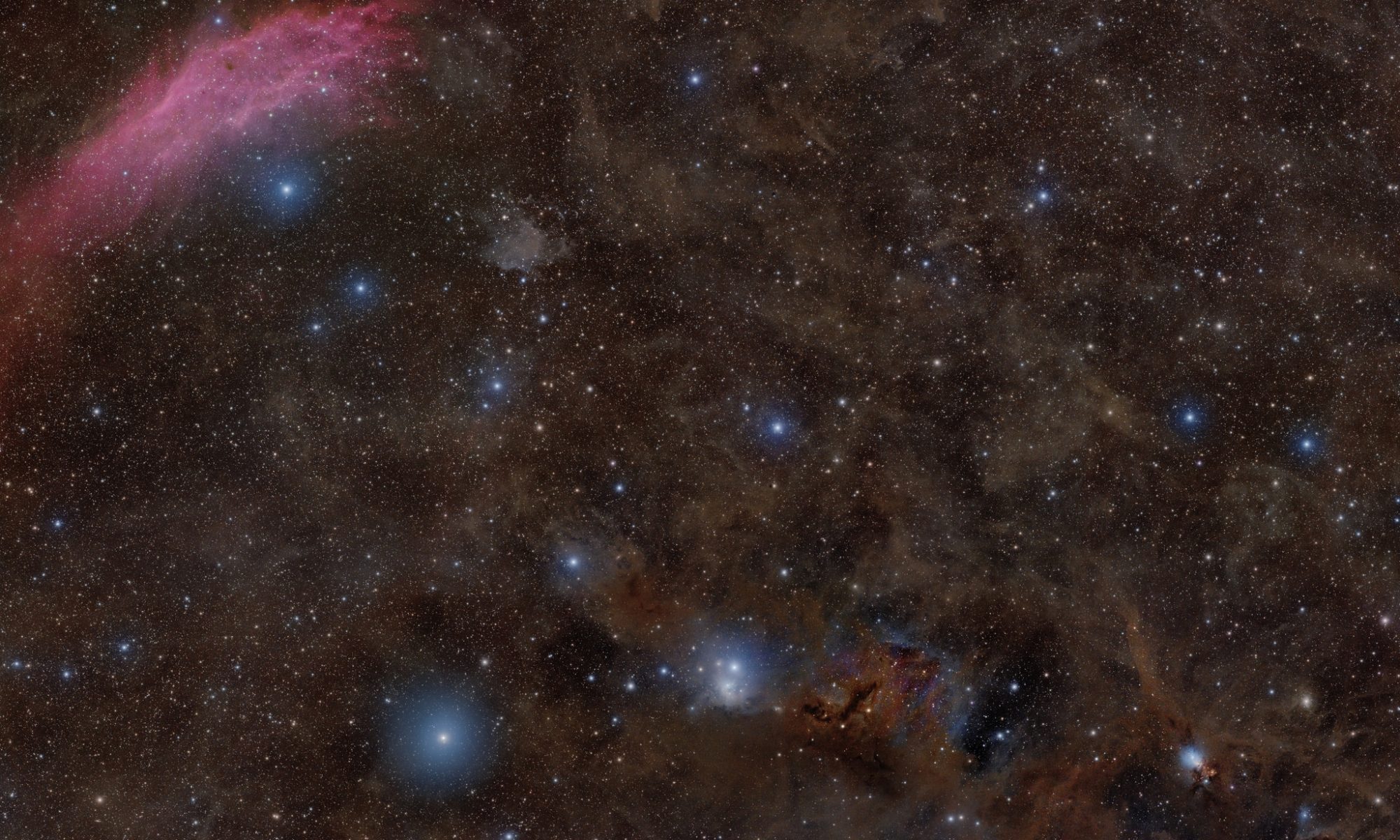
It has a major performance boost of 30-50% over 2.0.0-beta39 from calibration to integration, for mosaics even faster! We extensively optimized many critical parts of APP. All has been tested to guarantee correct optimizations. Drizzle and image resampling is much faster for instance, those modules have been completely rewritten. Much less memory usage. LNC 2.0 will be released which works much better and faster than LNC in it's current state. Improved Outlier Rejection with LN 2.0 rejection. macOS CMD+A works now in file chooser ! And more, all will be added to the release notes in the coming hours...
Update on the 2.0.0 release & the full manual
We are getting close to the 2.0.0 stable release and the full manual. The manual will soon become available on the website and also in PDF format. Both versions will be identical and once released, will start to follow the APP release cycle and thus will stay up-to-date to the latest APP version.
Once 2.0.0 is released, the price for APP will increase. Owner's license holders will not need to pay an upgrade fee to use 2.0.0, neither do Renter's license holders.
I am getting some strange color banding in my integration which is roughly in the shape of the flat master, as well as some fixed pattern noise (that I was hoping would have been removed by dithering). What's causing this artifact? Here is the integration, a single calibrated light, and a sample flat frame:
Zooming into the integration reveals what appears to be fixed pattern noise in one direction. I was dithering in RA only (I have some pretty severe Dec backlash), but only by 2 pixels -- I discovered later that I should have been dithering by much more, but wouldn't some dithering plus calibration have removed the fixed pattern noise? Polar alignment was off by about 5 arc minutes.
Also, I notice a difference when working with raw NEF files vs. FITS; when using FITS, I see more of a screen door effect when zooming into a FITS file compared to NEF:
What is causing this? The FITS file is not being detected as being from a color filter array so I turned on Force CFA.
Update: I didn't realize 1.063 was out (was using 1.062) so I upgraded to that to see if any of the fixes in there had some effect. Also, the screen door effect was due to the incorrect Bayer pattern being selected (should have been GBRG, not RGGB). Between those two changes, the banding issue appears to have gone away.
However, there is still the issue of the vertical fixed pattern noise; is that just a matter of needing to dither by more pixels, or something I could improve in calibration?
This post was modified 8 years ago 5 times by Mabula-Admin
I am getting some strange color banding in my integration which is roughly in the shape of the flat master, as well as some fixed pattern noise (that I was hoping would have been removed by dithering). What's causing this artifact? Here is the integration, a single calibrated light, and a sample flat frame:
To me at a first glance, this looks like a problem with how you created your flats. The individual flat shows an odd illumination difference at the top, which then trasnslates in a strange pattern in your integration I think. In the calibrated light, the error is already seen. Can you share how an uncalibrated lights looks?
Zooming into the integration reveals what appears to be fixed pattern noise in one direction. I was dithering in RA only (I have some pretty severe Dec backlash), but only by 2 pixels -- I discovered later that I should have been dithering by much more, but wouldn't some dithering plus calibration have removed the fixed pattern noise? Polar alignment was off by about 5 arc minutes.
If dithering is very small, then fixed pattern noise can still be apparent in the integration, so it could explain what you are describing. It depends on how large the fixed patterns are. On Bayer sensors, it's better to dither a bit more than 1-2 pixels. Why not dither 10-20 pixels ? That should improve things considerably and will not harm your field of view normally.
Also, I notice a difference when working with raw NEF files vs. FITS; when using FITS, I see more of a screen door effect when zooming into a FITS file compared to NEF:
What is causing this? The FITS file is not being detected as being from a color filter array so I turned on Force CFA.
Indeed, I fixed a problem in this department in APP 1.063:
FIXED, Flat-field Calibration with Bayer CFA patterns other than RGGB, there was a bug in normalization of flat frames for Bayer CFA sensors. This bug manifested itself if the Bayer CFA pattern was not the default pattern of RGGB. In most cases the resulting masterflat was still okay to be used, but if you created a MasterFlat out of flats with quite different histograms/exposure times then the problem was really severe, no good flat-field calibration was possible.
Example of a MasterFlat from a Canon EOS 5D Mark II with a GBRG CFA pattern, first 2 images is with the bug, notice that the resulting MasterFlat has an odd histogram and that, when zoomed in, the pixel structure is not smooth, due to having normalized the CFA pixels with an incorrect CFA pattern :
Next 2 images is with the bug fixed, notice that the histogram is now smooth and consistent with a single flat frame and, when zoomed in, the MasterFlat's pixel structure is now smooth:
If you need to set Force CFA, do make sure, that you set the correct Bayer CFA pattern before creating the masters, this CFA pattern is stored in the metadata 😉
Update: I didn't realize 1.063 was out (was using 1.062) so I upgraded to that to see if any of the fixes in there had some effect. Also, the screen door effect was due to the incorrect Bayer pattern being selected (should have been GBRG, not RGGB). Between those two changes, the banding issue appears to have gone away.
However, there is still the issue of the vertical fixed pattern noise; is that just a matter of needing to dither by more pixels, or something I could improve in calibration?
Yes I can see it in your screenshot. As in my previous answer, this could result from dithering in only 1 direction and with too small dither steps. But it's hard to tell without seeing the actual data.
How many lights were you integrating?
Do you see the same pattern in either the masterbias or the masterdark ?
Yes, the illumination difference in flats is due to the off-axis guider prism intruding a bit into the field of view. (I can't back it out because of the way the ZWO OAG is designed; backing it out would prevent the guider camera holder from being flush against the OAG body, which would allow it to flex.)
Here's an uncalibrated flat:
I was integrating 120 lights, 20 flats, dark flats, and darks. Bias was made from 76 frames. It is a Nikon D90.
I don't quite see the same pattern in the master bias or dark:
I will definitely try out a larger dither next time. Also, should I remake the bad pixel map using 1.063?
I did note that in 1.063 while the integration was significantly improved, there was still some minor color banding, but it was much less evident.
"Yes, the illumination difference in flats is due to the off-axis guider prism intruding a bit into the field of view. (I can't back it out because of the way the ZWO OAG is designed; backing it out would prevent the guider camera holder from being flush against the OAG body, which would allow it to flex.)"
Just make sure that the OAG position is not changed between shooting the lights and the flats 😉 then making good flats should be possible.
The latest version of APP, 1.068, has some improvements in Bad Pixel Mapping so you can always try to make a new Bad Pixel Map based on a nice set of flats and darks.