
UPDATE FROM MABULA
I have had a very rough 2 months unfortunately health wise. I was struck 3x in a row with bacterial infections. The second infection occurred after a routine hospital checkup and I became very sick. I had to rest and take a lot of antibiotics. Once I was recovering and restarting work 1 month ago, I again became sick. The infection was not yet gone, so even more antibiotics and rest was needed. Needless to say, it took a lot of my energy and I needed a lot of rest.
Finally, the infection is really gone and my energy is coming back step-by-step now and I have started work again. I am terribly sorry to have kept you waiting for support. I will address all outstanding questions and e-mails step-by step and will be on the forum daily from today.
APP 2.0.0-beta47 will come soon as well, a lot of work was already completed before I became very ill, so the release is also nearly ready for you. Beta47 will be much faster actually. Many workflows will be more than 2x faster, mosaics can even be 10x faster than before because registration really received a major boost... all compared to beta46. Before I release it, I will make sure that everything is working properly and then I will release it.
Wouter, please ignore last reply. I remembered that you said to load the files as lights and re-register them first. Kind of makes sense now.
Registration must ensure that bit depth/dimension are the same (amongst other things I'm sure).
I have a question, on the Rosette Nebula, do you think it is natural/accurate to have the image green on one side and red on the other? Or do I have a collimation issue (camera not square to the focal plane)?
Thanks,
Chris
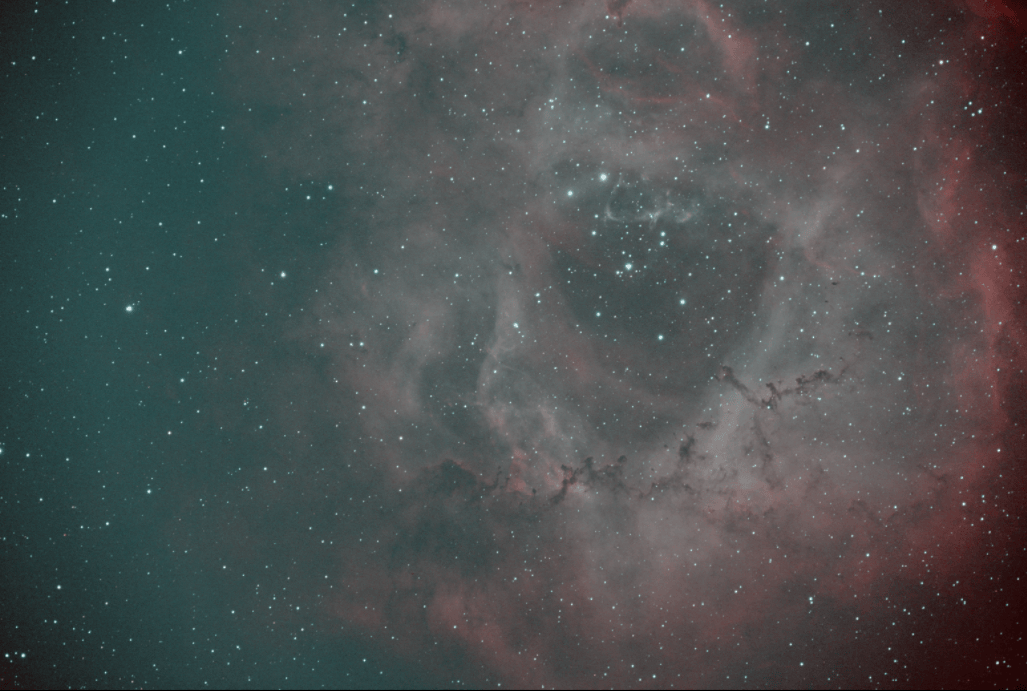
@chrism5527 In general the OIII signal is much weaker than the Ha signal. If there is a light gradient in the sky then that will be visible much more in OIII than in Ha. So before combining the two images you may want to use the "remove light pollution" tool in tab 9 on both integration results individually before combining them.
