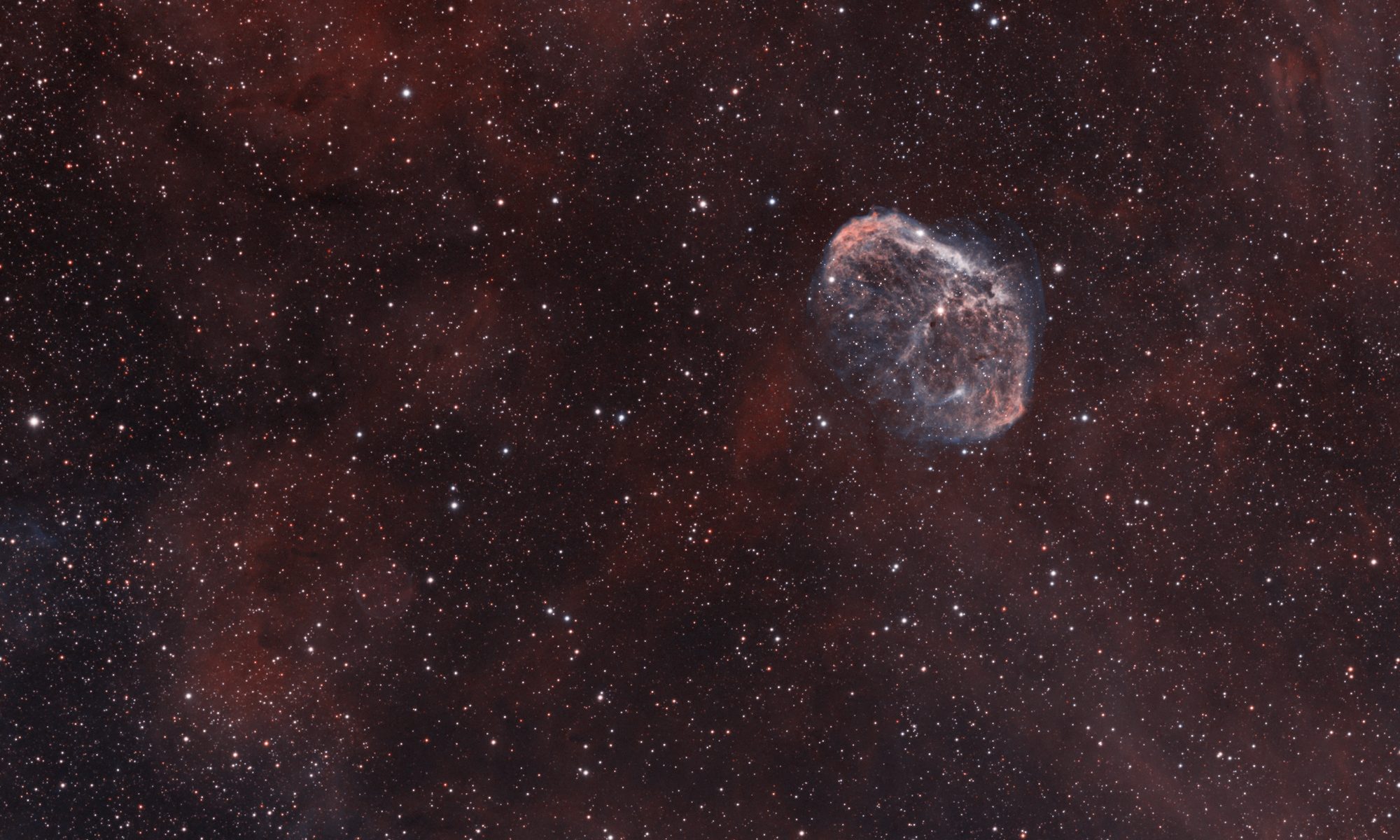
It did take a long time to have the work finished on this and it will have a major performance boost of 30-50% over 2.0.0-beta39 from calibration to integration. We extensively optimized many critical parts of APP. All has been tested to guarantee correct optimizations. Drizzle and image resampling is much faster for instance, those modules have been completely rewritten. Much less memory usage. LNC 2.0 will be released which works much better and faster than LNC in it's current state. And more, all will be added to the release notes in the coming weeks...
Update on the 2.0.0 release & the full manual
We are getting close to the 2.0.0 stable release and the full manual. The manual will soon become available on the website and also in PDF format. Both versions will be identical and once released, will start to follow the APP release cycle and thus will stay up-to-date to the latest APP version.
Once 2.0.0 is released, the price for APP will increase. Owner's license holders will not need to pay an upgrade fee to use 2.0.0, neither do Renter's license holders.
I've used the ASI 071mc-pro with a IdasLPS D1 Filter.
Total time could be a bit more for now it is 210 min.
Also a full proces in APP (except the text).
Kind regards,
Jan-Willem
Great Picture @jw_duijndamhetnet-nl,
I like it very much 😉 Great detail in both galaxies.
Like Greg @gregwrca indicated, it probably is a little bit too purple. The core of M81 would be a bit more neutral to yellow.
Can probably be done with a slight tweak in star color calibration?
Cheers,
Mabula
(@mabula-haverkamp-administrator)
Hi Mabula,
In deed the color is a bit to purple only as you suggested i did try the star color calibration.
I did read al the threads about the tool but it is a bit difficult to understand ho it now works, for example when i use the tool on my Orion an Rossette nebula i just adjust the slope a bit an the stars com out instantly much better a few other tweaks and i'm on the right way. (still learning)
But when i use the tool for example on my m81 (i did als have a Leo triplet) al the stars come out to yellow as well as the galaxy). Pleas can you explain to me what i'm doing wrong? I posted a few screen shots, they are a verry yellow to me.
Hope you could explain it to me?
P.S. i do like you're video tutorials verry much, i know you're verry bussy with APP development but maybe could you make a video tutorial about how to use the star calibration tool. When i (mabe we all) can see how you use it, it is much easier to understand what the tool does and how to interpert the settings, and to "copy" you're acctions.
By looking at the psoted screenshot, I think you are nearly there.
The constants at -0.25 look okay. The slopes possibly a bit lower, try 0,9 and 1.80 and then finally the Red-Blue slider. You have set it to 0.20, which will make it a lot redder.
What happens if you leave at 0.0 ? Then there should be a bit more color and blue.
I did try you're settings but the galaxy keeps on getting to yellow (see screen shot) meanwhile when i don't apply the star callibration tool the colors are a bit nicer to mee. Am i doning something wrong?
Thanx againg for you're tips am tricks. But it is still verry hard to make a good adjustment. I want to show you 2 try's.
But i still can't get a good color in the m81 area, i've seen a lot of pictures the most of them are purple/pinkish on the out side and yellow on the inside. But i still can't reach the good colors.
Could you assit me some more, or perhaps could you show me how to achieve this. Perhaps i could send you my "basic" Fits file?
Thanx againg for you're tips am tricks. But it is still verry hard to make a good adjustment. I want to show you 2 try's.
But i still can't get a good color in the m81 area, i've seen a lot of pictures the most of them are purple/pinkish on the out side and yellow on the inside. But i still can't reach the good colors.
Could you assit me some more, or perhaps could you show me how to achieve this. Perhaps i could send you my "basic" Fits file?
Cheers,
Jan-Willem
Hi Jan-Willem @jw_duijndamhetnet-nl ,
No problem, send me the original integration file, so I can start from the integration result 😉
The difficulty could very well be due to using the IDAS LPS filter.
The Black Body Star Color Calibration needs broadband data, as does any star color calibration routine. Ths IDAS LPS filter is not narrowband off course, but it is a bit tighter, so the settings will be quite different when compared to regular RGB filters.
You can send it to me using wetransfer.com , please use support@astropixelprocessor.com
No problem, send me the original integration file, so I can start from the integration result 😉
The difficulty could very well be due to using the IDAS LPS filter.
The Black Body Star Color Calibration needs broadband data, as does any star color calibration routine. Ths IDAS LPS filter is not narrowband off course, but it is a bit tighter, so the settings will be quite different when compared to regular RGB filters.
You can send it to me using wetransfer.com , please use support@astropixelprocessor.com
Mabula
So Mabula, would an IR CUT filter also affect the color calibration routine as a LPS filter would?!?!
I just sent you the file. I hope you can get more out of it then i can. The only thing i can't understand is: why the star color calibratie isn't working for me in the m81 but is working perfect in the picture of the rosette nebula. In both i used the Idas LPS D1 filter.
No problem, send me the original integration file, so I can start from the integration result 😉
The difficulty could very well be due to using the IDAS LPS filter.
The Black Body Star Color Calibration needs broadband data, as does any star color calibration routine. Ths IDAS LPS filter is not narrowband off course, but it is a bit tighter, so the settings will be quite different when compared to regular RGB filters.
You can send it to me using wetransfer.com , please use support@astropixelprocessor.com
Mabula
So Mabula, would an IR CUT filter also affect the color calibration routine as a LPS filter would?!?!
No not really, an IR cut fitler blocks InfraRed. But other than that, it will pass the complete RGB spectrum, giving you almost the same results as regular RGB filters. So the calibration parameters for slope and constants will almost be the same.
An LPS filter like the LPS D1 IDAS from Hutech is very different. These filters are a bit between broadband and narrowband filters. In the R, G, B bands, a normal broadband filter has high transmission in the spectral windows:
R - 400-530 nanometer
G - 490-610 nanometer
B - 590-700 nanometer
This is very rough, different brands will have different spectral windows and central wavelength, but the point is, they do transmit light across the whole window.
An LPS D1 filter doesn't. It blocks parts of these windows. And that is the reasion why the calibration parameters will be very different.
I just sent you the file. I hope you can get more out of it then i can. The only thing i can't understand is: why the star color calibratie isn't working for me in the m81 but is working perfect in the picture of the rosette nebula. In both i used the Idas LPS D1 filter.
I hope you can find out what i'm doing wrong.
Thank you verry much!!!!
Cheers, Jan-Willem
Hi Jan-Willem @jw_duijndamhetnet-nl,
I have had a look at your M81 & M82 data shot with the IDAS LPS D1 fitler.
As I thought, data shot with this filter need some more tweaking with the Black Body Star Color Calibration parameters. Especially the slopes need to be much lower than normal. And in this case, it turns out that the Red-Blue slider needs to pushed significantly to the blue side. The initial result is very red. Once pushed to blue (about 30%) the slopes become better visisble.
This is what I get, original integration, background corrected, and finally after star color calibration and crops of M81 with M82:
The used parameters and color-color plots for the Black Body Star Color Calibration are shown in this screenshot:
Star rejection kappa 3
BLUE-RED - 0,29 (strongly towards Blue)
BG-GR color-color diagram
Slope 0,25 (which is low, but it's normal for these LPS fitlers, a Baader UHC-s filter also needs a value similar to this)
Constant: -0,29
BR-GR color-color diagram
Slope 1,20
Constant -0,29
The constants are found, by lowering them until any green cast dissapears in this case.
The next time that you shoot data with the IDAS LPS filter, I would expect that you need roughly the same slope and contant values. Only the Red-Blue slider needs to be tweaked then. This is basically white star calibration and fully dependant on the ratio of blue and red stars in the selected star population.