

June 24 2026 APP 2.0.0-beta46 has been released !
Improved internal memory configuration (lower ! memory usage), fixed beta45 startup issue, fixed Set Save Directory & 2-panel mosaics.
May 27 2026 APP 2.0.0-beta45 has been released !
Fully Multi-Threaded LNC, many improvements for the registration engine, platform upgrade, and further tuning of internal memory consumption and memory release back to OS.
Apr 14 2026: Google Pay, Apple Pay & WeChat Pay added as payment options
Update on the 2.0.0 release & the full manual
We are getting close to the 2.0.0 stable release and the full manual. The manual will soon become available on the website and also in PDF format. Both versions will be identical and once released, will start to follow the APP release cycle and thus will stay up-to-date to the latest APP version.
Once 2.0.0 is released, the price for APP will increase. Owner's license holders will not need to pay an upgrade fee to use 2.0.0, neither do Renter's license holders.
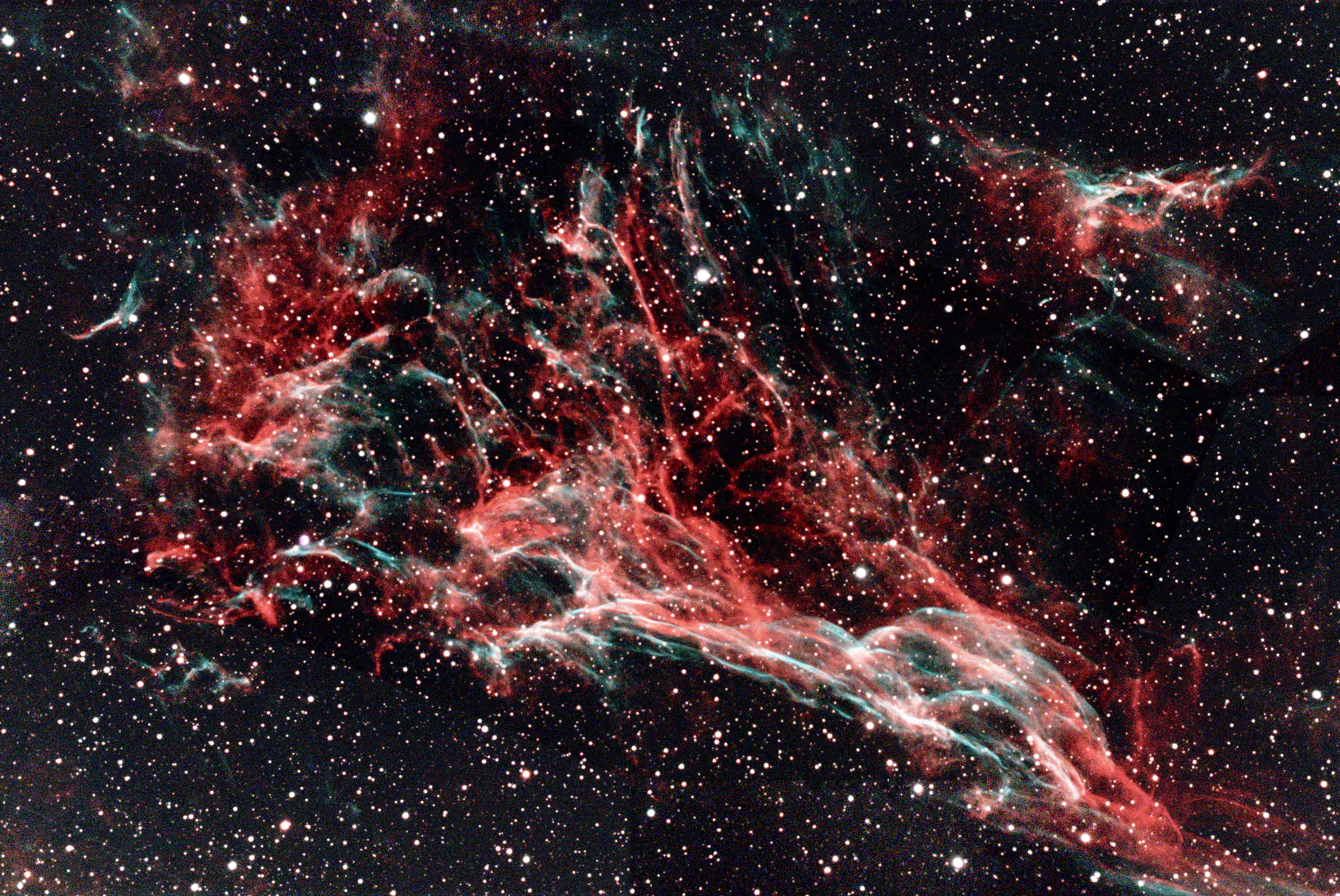
(Note: I am very pleased with APP’s ability to combine data from two different setups, including the LNC and banding adjustments in the Integrate module. Very powerful and useful functionality!)
Fleming’s Triangle is part of the Cygnus Loop in the Cygnus Constellation, also known as the Veil Nebula, a shock wave produced by a supernova that was first visible on earth about 5000 years ago. The triangle was discovered by Williamina Fleming in 1904 on a photographic plate at the Harvard College Observatory, so it is rightly known as Fleming’s Triangle. It was common for such discoveries to be named after the head of an observatory, so it is traditionally known as Pickering’s Triangle, after the head of the observatory. The August 2023 Sky & Telescope has an interesting article about Williamina Fleming’s work. Happy to see this accomplished woman finally being recognized for all her contributions!
As one of my favorite targets I find myself returning to this target every summer. The red filaments are from ionized hydrogen while the blue filaments are from ionized oxygen.
The image combines 11 hours of 5 minute exposures with an 8” Meade LX200 ACF telescope, ANTILA ALP-T Dual Narrowband filter from July 2022 and June 2023, using two different cooled cameras, the ASI2600MC and the ASI294MC-PRO. Other equipment used included the ASAIR Plus, ASI174mm-mini for guiding with ASI OAG, CEM40 mount. Processed and combined using APP and PS.
That's awesome and indeed a thing I like about APP as well. 🙂
