
Mar 28 2026 APP 2.0.0-beta40 will be released in 7 days.
It did take a long time to have the work finished on this and it will have a major performance boost of 30-50% over 2.0.0-beta39 from calibration to integration. We extensively optimized many critical parts of APP. All has been tested to guarantee correct optimizations. Drizzle and image resampling is much faster for instance, those modules have been completely rewritten. Much less memory usage. LNC 2.0 will be released which works much better and faster than LNC in it's current state. And more, all will be added to the release notes in the coming weeks...
Update on the 2.0.0 release & the full manual
We are getting close to the 2.0.0 stable release and the full manual. The manual will soon become available on the website and also in PDF format. Both versions will be identical and once released, will start to follow the APP release cycle and thus will stay up-to-date to the latest APP version.
Once 2.0.0 is released, the price for APP will increase. Owner's license holders will not need to pay an upgrade fee to use 2.0.0, neither do Renter's license holders.
Hello from Austria 🙂
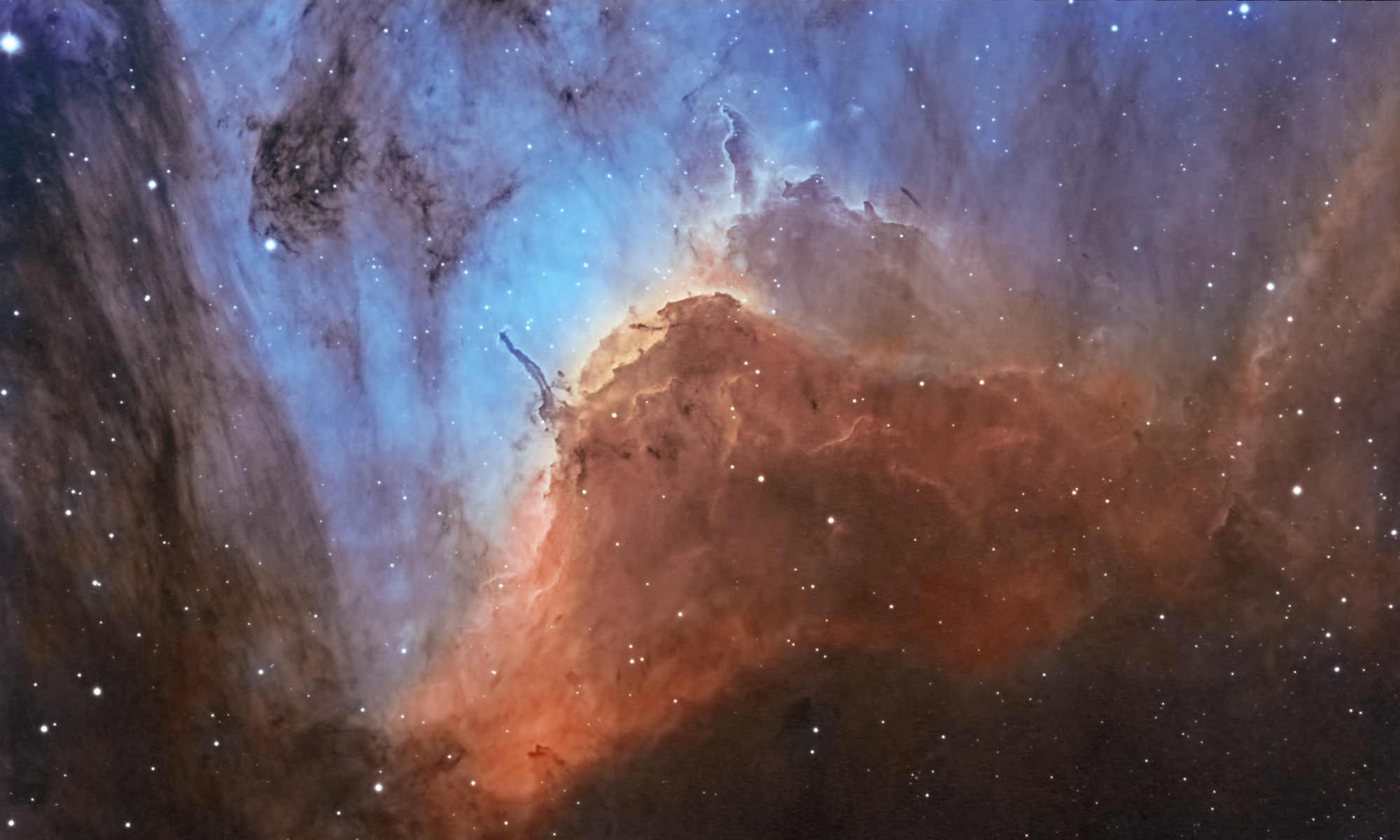
I tried my new filter and got the following result.
The full quality is available here: https://www.astrobin.com/g6rtfv/B/?nc=user

CS
Gernot
Seems like it was a good purchase. 🙂
Yes it was 🙂
I am not satisfied with the stars because at f/2.2 there are red halos around them.
I still have to test whether this has to do with the lens or the filter.
CS
I see what you mean on the full resolution. I think it might also just be the nature of these 2 signals combined, it's not always preventable.
Amazing wide field picture!
Concerning the halos: that's what we get as well when using our L-Extreme filter and even when using separate Ha and OIII filters. It is in the nature of stars. some stars are cool and therefore red, some are hot and therefore blue. The result is that red stars will appear brighter in the Ha channel and fainter in the OIII channel. Blue stars appear brighter in the OIII channel and fainter in the Ha channel. The result is red and blue halos around stars. There is nothing you can do about that apart from trying to reduce the halos in post-processing. I never really succeeded in doing that in a satisfactory way myself though so I learned to live with it.
Clear skies, Wouter
