It did take a long time to have the work finished on this and it will have a major performance boost of 30-50% over 2.0.0-beta39 from calibration to integration. We extensively optimized many critical parts of APP. All has been tested to guarantee correct optimizations. Drizzle and image resampling is much faster for instance, those modules have been completely rewritten. Much less memory usage. LNC 2.0 will be released which works much better and faster than LNC in it's current state. And more, all will be added to the release notes in the coming weeks...
Update on the 2.0.0 release & the full manual
We are getting close to the 2.0.0 stable release and the full manual. The manual will soon become available on the website and also in PDF format. Both versions will be identical and once released, will start to follow the APP release cycle and thus will stay up-to-date to the latest APP version.
Once 2.0.0 is released, the price for APP will increase. Owner's license holders will not need to pay an upgrade fee to use 2.0.0, neither do Renter's license holders.
So I've done some reading on the topic through out the forum, but I am still not very sure at how to tackle this particular function
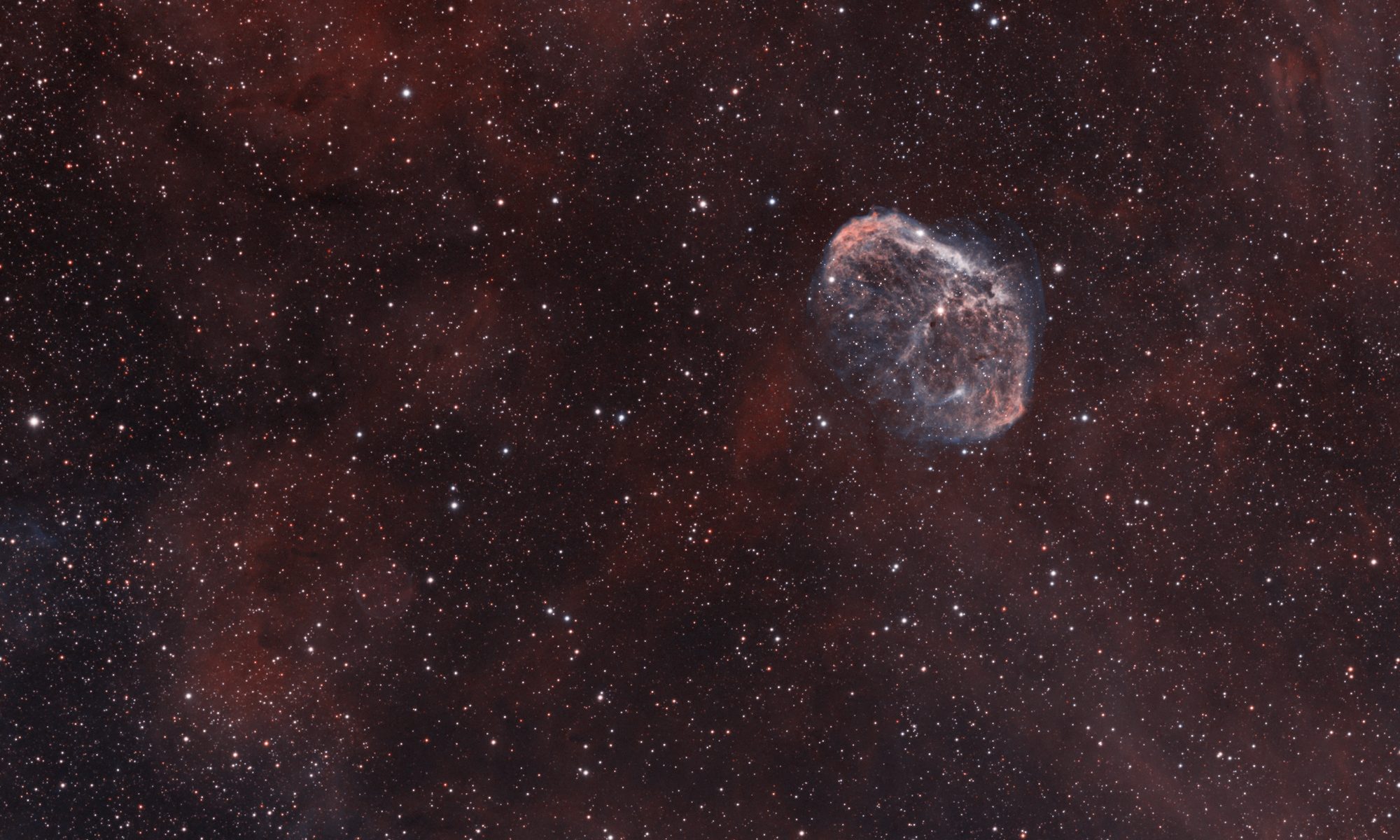
Here is a stack (with LP removal and BG calibration already applied) of the Veil Nebula I attempted last night, would someone be kind enough to run me through Calibrate Star Colour function with this?
First of all, if you perform Light Pollution correction, Background calibration is done as well (changed some versions ago). You don't need to do Background Calibration separately after the Remove Light Pollution tool since it's done already 😉
This is what I get with the Star Color Calibration:
Please check this new video tutorial on star color calibration as well, it contains explanation on the parameters:
Can you share the details of this data capture? It seems that you might have used an LP filter or not?
which camera
which filters if any
which telescope
Star Color Calibration in principle with the Black Body and Extinction model needs Broadband RGB data. If you use a LP filter, the initial settins need to be changed quite bit..
First of all, if you perform Light Pollution correction, Background calibration is done as well (changed some versions ago). You don't need to do Background Calibration separately after the Remove Light Pollution tool since it's done already 😉
This is what I get with the Star Color Calibration:
Please check this new video tutorial on star color calibration as well, it contains explanation on the parameters:
Can you share the details of this data capture? It seems that you might have used an LP filter or not?
which camera
which filters if any
which telescope
Star Color Calibration in principle with the Black Body and Extinction model needs Broadband RGB data. If you use a LP filter, the initial settins need to be changed quite bit..
Mabula
hi Mabula thanks for the reply!
it is shot with a modified 760D (one of the low pass filters removed and replaced with baader clear glass) shot with sigma 135mm 1.8 art with STC astro-m LP filter in front, thanks!
it is shot with a modified 760D (one of the low pass filters removed and replaced with baader clear glass) shot with sigma 135mm 1.8 art with STC astro-m LP filter in front, thanks!
Star Color Calibration works best if you have broadband data. Such an LP filter will complicate star color calibration using black body physics. This means that you will need to be more aggresive with especially the slope parameters. They probably need to be much lower than the default values of 1.0 and 2.0. It can be as low as 0.4 and 1.0 depending on the filter and the used camera.

 Download (St-avg-1492.0s-NR-x_1.0_LZ3-NS-full-eq-add-sc_BWMV_nor-AA-RL-MBB5_1stLNC_it1-mod-lpc-cbg-cbg.fits)


