
2026-10-09 APP 2.0.0-beta48 has been released !
This is mainly a bug fix release for the reported bugs in beta47. In addition it has a significant User Interface performance improvement noticable when you need to process 1000s of images in APP.
2026-10-03 APP 2.0.0-beta47 has been released !
This is a very big release... many code optimizations/rewrites, many parts of APP are much faster and more precise, especially star analysis and registration are much faster ! Big mosaics will go much faster 🙂
And we introduce a new preview filter, which includes the new Adaptive Deep Sky Stretch and a General Levels Stretch, this has been long over due. The old preview filter (the panel on the right side to stretch and preview your data) has not been updated for a couple of years and it is a critical part of any APP session.
Adaptive Deep Sky Stretch or ADSS is a much more intuitive stretch algorithm. It is also color preserving (which is a great new addition in itself ! ) which means that the highlights are no longer bleached, color is maintained from the linear data while stretching. You can simply stretch your data using the sky background level and signal width sliders which work much easier and more intuitive. You no longer need to fiddle with the old complicated sliders with zoom buttons. All the zoom buttons for the sliders are made redundant. And you can enter slider values in the slider value fields yourself. I will make a youtube video in the coming days to explain and fully introduce ADSS. Once the video is ready, it will be highlighted on the forum.
RGB Combine upgrade !. The RGB Combine Tool has been rewritten mostly. The tool is faster and easier to use and most importantly, the Luminance slider to inject a luminance channel or channels into the RGB composite is now working correctly. It no longer bleaches the RGB colors. Combined with the new ADSS preview, you will get much better and easier great composites with great color! I will also explain this in a new youtube video.
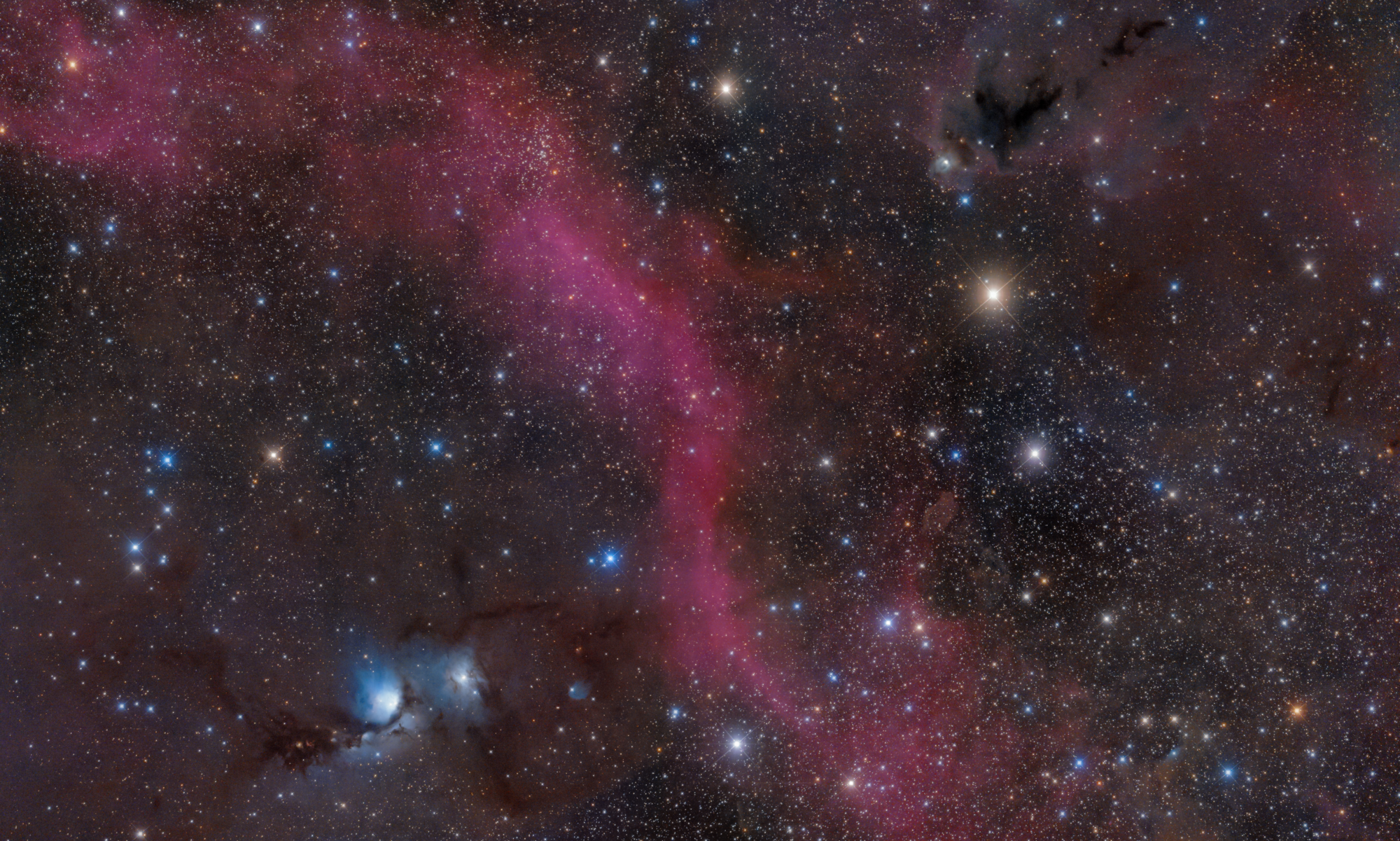
Is it normal for the color of the nebulosity to change after performing Calibrate Star Color? The attached screen grabs of the Lobster Nebula and surrounding objects changed from red (image on the top) to the image on the bottom.
I believe this the first time this has occurred.
Thanks
Jeff


Here are two more images. Again the top, red image is before calibration.


It is yes, the tool calibrates the color of the entire image, based on the stars. However, this won't work well with narrowband data as the tool needs broad spectrum data.
@vincent-mod OK Thanks. This was shot with an Optolong L-enhance Filter, Ha mod Nikon D5300 and WO Z61. Interesting that this is the first time I have noticed this. I'll have to go back and check my last few images to see if there was a big difference. And I just didn't catch it.
@vincent-mod In your opinion then I should not use this tool when I use this filter, correct?
I did look back at a couple of my other shots and sure enough, the nebula did change. I don't know how I didn't notice it before.
You shouldn't indeed, the tool can't use narrowband data to properly calculate the correct colors. So in case of data like that, it becomes more of artistic processing. 🙂 Of course you can always look up the colors that belong to a certain wavelength (for Ha for instance) and try to represent that.
