
UPDATE FROM MABULA
I have had a very rough 2 months unfortunately health wise. I was struck 3x in a row with bacterial infections. The second infection occurred after a routine hospital checkup and I became very sick. I had to rest and take a lot of antibiotics. Once I was recovering and restarting work 1 month ago, I again became sick. The infection was not yet gone, so even more antibiotics and rest was needed. Needless to say, it took a lot of my energy and I needed a lot of rest.
Finally, the infection is really gone and my energy is coming back step-by-step now and I have started work again. I am terribly sorry to have kept you waiting for support. I will address all outstanding questions and e-mails step-by step and will be on the forum daily from today.
APP 2.0.0-beta47 will come soon as well, a lot of work was already completed before I became very ill, so the release is also nearly ready for you. Beta47 will be much faster actually. Many workflows will be more than 2x faster, mosaics can even be 10x faster than before because registration really received a major boost... all compared to beta46. Before I release it, I will make sure that everything is working properly and then I will release it.
Having just broken the sound barrier with 8-minute exposures, unguided, following software changes to my Raspberry Pi's periodic error correction, I wanted to ask the question:
Are the following equivalent?
1. Seven 8-minute frames using bin2 with 2x drizzle.
2. Seven 32-minute frames using bin1 with no drizzle.
In terms of signal-to-noise are they equivalent?
Clearly #2 will have better resolution but should #1 come close?
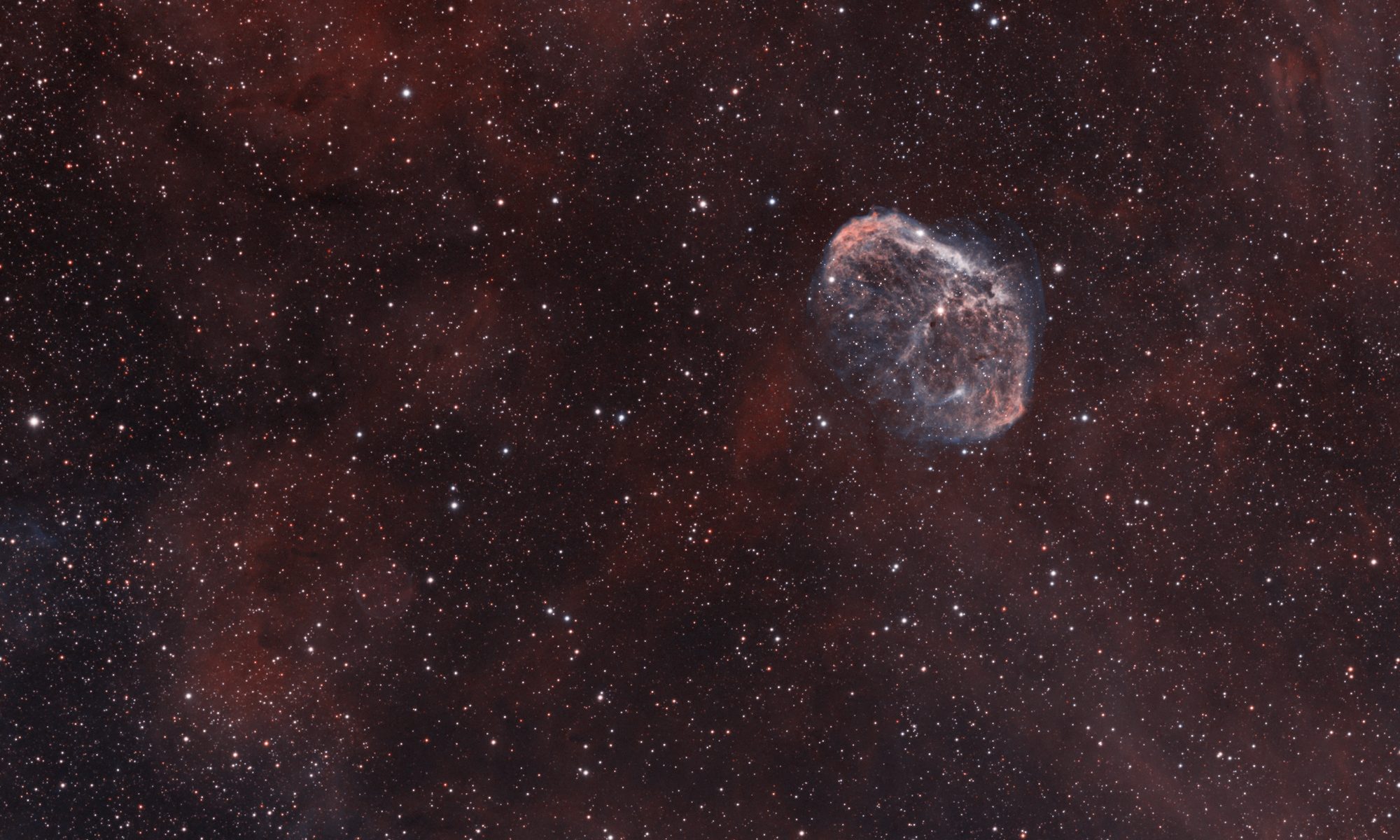
Two nights ago I captured seven 8-minute frames of PacMan in Ha (see attachment "PacMan_Ha_7x8m_bin2_no-drizzle".) Compare that to "PacMan_Ha_7x8m_bin2_drizzle-2x".
Is the drizzled image close to what I could expect by capturing seven 32-minutes frames using bin1?
I am wondering if bin2 imaging is a better option for me considering that I have a relatively slow f/5.9 refractor and a camera that is least sensitive to red.
Thank you.


Those are very good questions to which I have no certain answer. I would think using bin 1 will always give you better details as it's the best and most direct way to gather real data, whereas bin 2 is not necessarily solved by drizzling as far as I understand it. I could be wrong though, but I thought there's a difference between upsampling and dithering in this case. Bin2 is usually used to gather color data with more sensitivity and faster and then combining that with bin1 data which has the detail. Maybe @mabula-admin has more to say about it.
