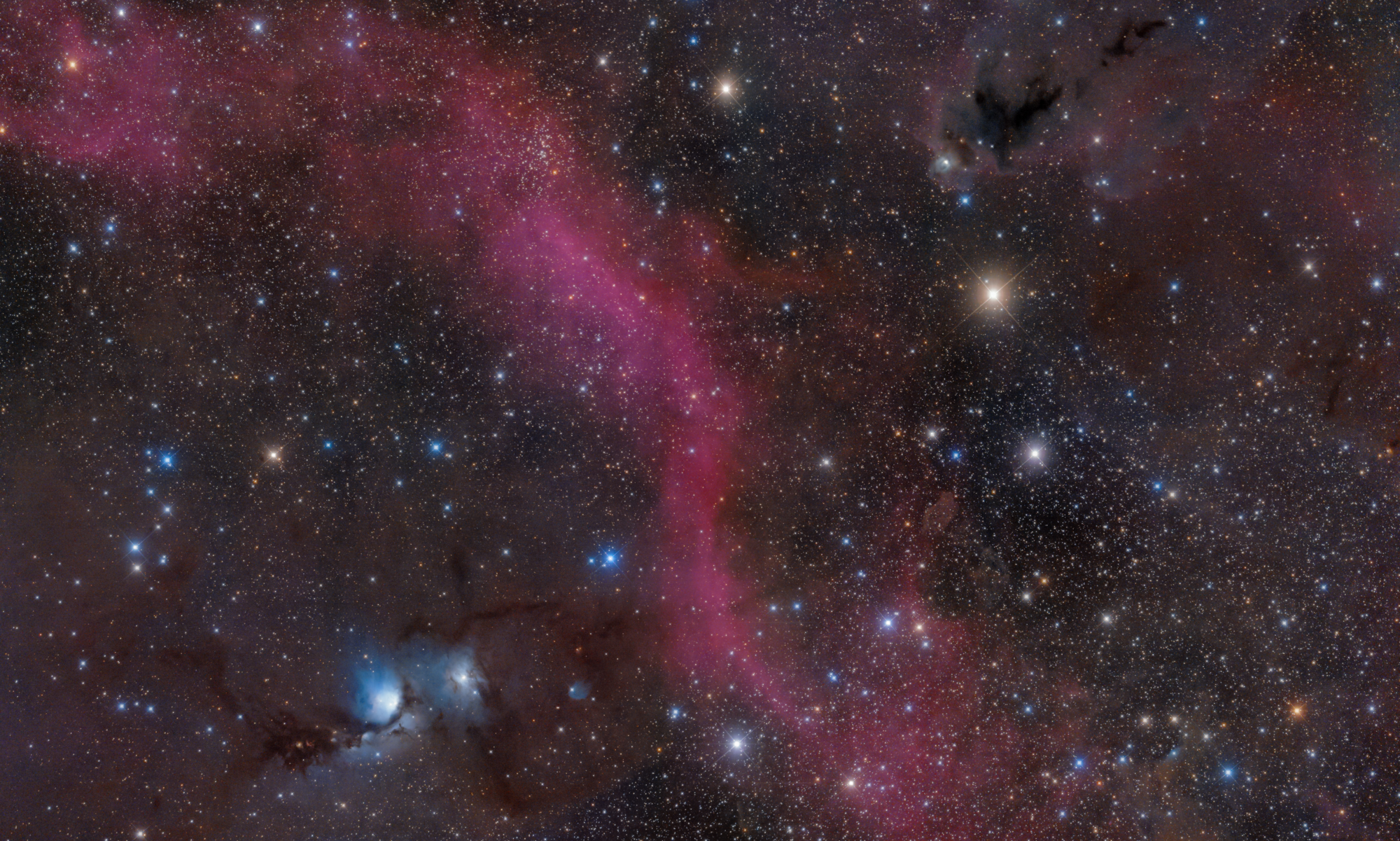

UPDATE FROM MABULA
I have had a very rough 2 months unfortunately health wise. I was struck 3x in a row with bacterial infections. The second infection occurred after a routine hospital checkup and I became very sick. I had to rest and take a lot of antibiotics. Once I was recovering and restarting work 1 month ago, I again became sick. The infection was not yet gone, so even more antibiotics and rest was needed. Needless to say, it took a lot of my energy and I needed a lot of rest.
Finally, the infection is really gone and my energy is coming back step-by-step now and I have started work again. I am terribly sorry to have kept you waiting for support. I will address all outstanding questions and e-mails step-by step and will be on the forum daily from today.
APP 2.0.0-beta47 will come soon as well, a lot of work was already completed before I became very ill, so the release is also nearly ready for you. Beta47 will be much faster actually. Many workflows will be more than 2x faster, mosaics can even be 10x faster than before because registration really received a major boost... all compared to beta46. Before I release it, I will make sure that everything is working properly and then I will release it.
Hi
I encountered an issue with registration during multi-channel mosaic, mainly due to the high RMS value, which caused the stars in the final image to not match and resulting in ghosting.
My device is Sony A7, and I have taken a total of 7 photos in a row using Tamron 17-28.H-alpha. 21 RGB shots were taken in 3 rows, with 7 shots per row.The focal length when I was shooting was 17mm
I carefully set up everything that can be set according to the forum tutorial.
For example, star recognition tested from 500 to 8000
The registration model has been tested for triangles, quadrilaterals, and pentagons, and dynamic distortion calibration has also been tested on or off. The same camera has also been tested on and off.
Registration mode selection mosaic.
I have tested all the above settings and the results are that the RMS value is too high. In some cases, the RMS value is over 100, and in others, the RMS value can reach tens of thousands, making it impossible to register.
In addition, I also tested that if I only perform RGB mosaic registration alone, it seems to yield normal results, but as soon as H-alpha is added for multi-channel mosaic registration, it fails.
Using the same settings, it was normal for me to use another set of RGB and H-alpha photos before.
I have been unable to find the reason. Can you help me check where the problem lies? Thank you!
I have uploaded the information for this trip to Google Cloud Drive
RGB。 https://drive.google.com/drive/folders/1o5_aHYEs2ng-Hi3WbamJhh-gubaLiPVB?usp=sharing
H-α。 https://drive.google.com/drive/folders/1Ic4VxnDTtYnQOf0YDj1sreo1BApqYXL2?usp=sharing
Hi @gaox1122,
Thank you for sharing your issue and your data, I will try to solve this in the coming days 😉 and will report back as soon as possible.
Mabula
Hi Xiang @gaox1122,
It took some time, but I have tested now your data in the upcoming 2.0.0-beta39 release with a much improved registration engine and I am glad to announce that all is working perfectly now on your data. I can register the RGB and H-alpha data at the same time in multi-channel mode.
In 3) Analyse stars i used only 1000 stars, the new registration engine is way more robust and smart and less stars are needed now to get registration working without issues/errors.
I get a mosaic registration result of mlosaic 0,61 - 19932, so RMS is only 0,61 pixel using 19932 star pairs in the mosaic.
I have implemented several new projections as well. This is your RGB data with Hammer-Aitoff projection. Please note the much simple 4) Register menu in 2.0.0-beta39.

Apologies that it took so long to solve this, but I have worked extensively in the last couple of months to release a very big update now with 2.0.0-beta39. I will try to release it within 1-2 weeks time.
Finally, the data that you uploaded is in TIFF format and thus already stretched. That makes it harder for APP to process it, since in all of APP, the algorithms assume linear data and that keeps post processing options fully open. Once stretched, the flexibility in post processing drops big time. Star analysis for instance works much better on linear data, the star centroids will be more precise. Thus registration will be more precise and robust. But gladly, APP can now process this without issue into a mosaic.
Mabula
