
2026-10-09 APP 2.0.0-beta48 has been released !
This is mainly a bug fix release for the reported bugs in beta47. In addition it has a significant User Interface performance improvement noticable when you need to process 1000s of images in APP.
2026-10-03 APP 2.0.0-beta47 has been released !
This is a very big release... many code optimizations/rewrites, many parts of APP are much faster and more precise, especially star analysis and registration are much faster ! Big mosaics will go much faster 🙂
And we introduce a new preview filter, which includes the new Adaptive Deep Sky Stretch and a General Levels Stretch, this has been long over due. The old preview filter (the panel on the right side to stretch and preview your data) has not been updated for a couple of years and it is a critical part of any APP session.
Adaptive Deep Sky Stretch or ADSS is a much more intuitive stretch algorithm. It is also color preserving (which is a great new addition in itself ! ) which means that the highlights are no longer bleached, color is maintained from the linear data while stretching. You can simply stretch your data using the sky background level and signal width sliders which work much easier and more intuitive. You no longer need to fiddle with the old complicated sliders with zoom buttons. All the zoom buttons for the sliders are made redundant. And you can enter slider values in the slider value fields yourself. I will make a youtube video in the coming days to explain and fully introduce ADSS. Once the video is ready, it will be highlighted on the forum.
RGB Combine upgrade !. The RGB Combine Tool has been rewritten mostly. The tool is faster and easier to use and most importantly, the Luminance slider to inject a luminance channel or channels into the RGB composite is now working correctly. It no longer bleaches the RGB colors. Combined with the new ADSS preview, you will get much better and easier great composites with great color! I will also explain this in a new youtube video.
Good morning everyone,
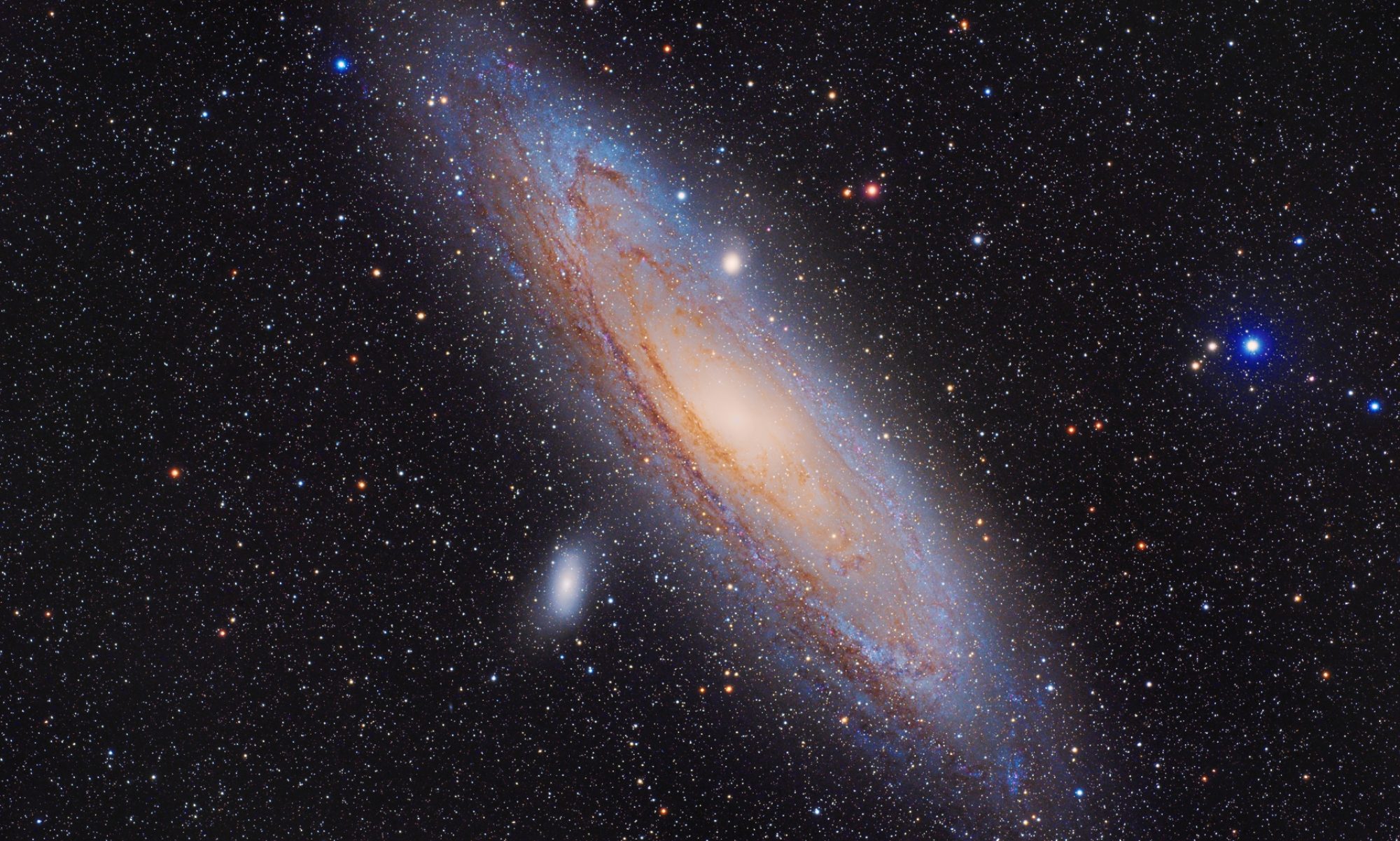
I am quite new to APP and to astrophotography in general. My actual project is a 2x2 mosaic of Andromeda Galaxy. So far, I only got 3 out of 4 parts of the mosaic, but I decided to process them anyway on APP to see how it works.
The result is pretty strange. Even though each panel looks somehow OK before integration, that is what I got after integration (see attached picture). The South-West panel is completely "burned" and the North-West panel has the background much more illuminated 🙄. Also, the North-West panel is too tilted as compared to the other two, but this is probably due to the camera that was slightly rotated during that photo session.

Few comments on the parameters I have chosen:
- 3/ Analyse Stars
- I set that to 3000
- 4/ Register
- Quadrilaterals, scale start at 5, scale stop at 12, use dynamic distortion correction, same camera and optics. Registration mode mosaic, registration model projective.
- 5/ Normalize
- Mode advanced, multiply-scale, BWMV. Background neutralisation enabled
- 6/ Integration
- Integrate all together, automatic integration, composition mode full, 1st degree LNC with 3 iterations. I have enabled the MBB at 10%
For information, disabling the MBB does not help.
Any idea of the reason of this issue ? Perhaps is it due to the fact that one panel is missing ?
Thanks a lot for the help 😀
No, this is likely because of differences in the panels themselves. In the background etc. the calculation becomes different then. Maybe there is a bit of an issue with that panel, difficult to judge. What happens when you use the LP tool (for light pollution)?
Hello Vincent,
Thanks for your quick reply. I did not use (yet) the LP tool. I will give a try later. Also, the different panels looks quite OK before processing. I post here some shoots of the different panels (not calibrated)


Yes on their own they seem to be fine, but there can be some differences that get more extreme when APP calculates the overall mosaic. This should be able to be corrected with the Light Pollution tool though. If that doesn't work well there might still be a data issue which I can look at.
@vincent-mod
Hello Vincent,
Unfortunately, in these days I have lost the access to the hardware I was using to run APP. I am now buying a dedicated workstation.
Nevertheless, following your suggestion I have tried to use the tool for light pollution removal. The result was not good and I did not manage to improve the picture. Then, I have found this post (link) and I have tried to do not use the LNC in the registration phase. It looks much better, even though for some other reasons one of the panel had some issues during the normalization phase, with some green halo appearing on the image.
I will try again with the new hardware and keep you posted.
Thanks a lot once again,
Jacopo
Oeh that's not nice. Good luck with the new system!
Good find on that related issue, though I wouldn't expect the overlapping to be such an issue for you.
