
Mar 28 2026 APP 2.0.0-beta40 will be released in 7 days.
It did take a long time to have the work finished on this and it will have a major performance boost of 30-50% over 2.0.0-beta39 from calibration to integration. We extensively optimized many critical parts of APP. All has been tested to guarantee correct optimizations. Drizzle and image resampling is much faster for instance, those modules have been completely rewritten. Much less memory usage. LNC 2.0 will be released which works much better and faster than LNC in it's current state. And more, all will be added to the release notes in the coming weeks...
Update on the 2.0.0 release & the full manual
We are getting close to the 2.0.0 stable release and the full manual. The manual will soon become available on the website and also in PDF format. Both versions will be identical and once released, will start to follow the APP release cycle and thus will stay up-to-date to the latest APP version.
Once 2.0.0 is released, the price for APP will increase. Owner's license holders will not need to pay an upgrade fee to use 2.0.0, neither do Renter's license holders.
Topic starter
March 7, 2025 15:27

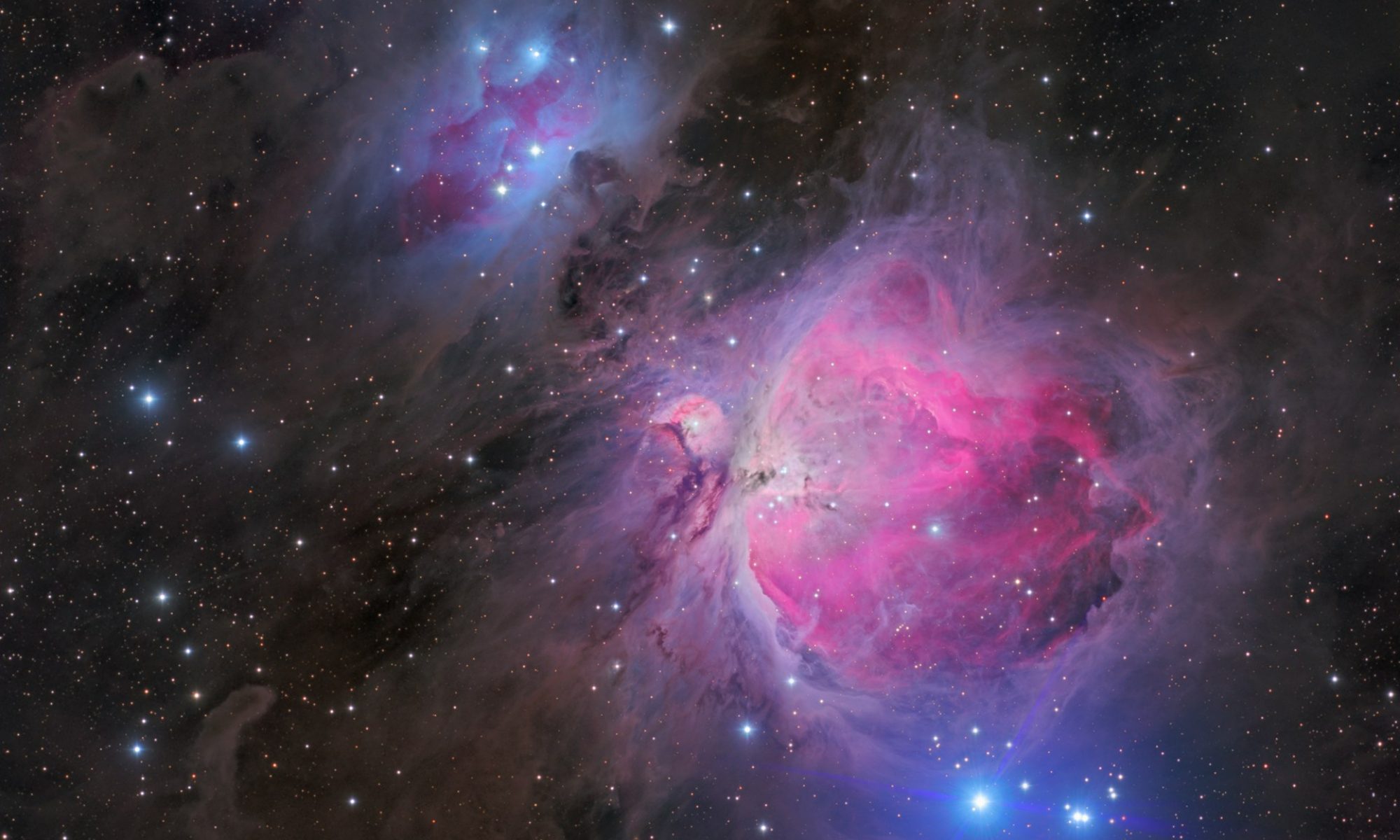
This image showcases the breathtaking Cone Nebula (NGC 2264) and the surrounding Fox Fur Nebula (LBN 911) in the constellation Monoceros. Captured in a narrowband SHO palette (Sulfur-II, Hydrogen-alpha, Oxygen-III), the image reveals the intricate details of this stellar nursery, where powerful stellar winds and radiation sculpt cosmic clouds into dramatic structures.
The Cone Nebula stands as a towering pillar of dust and gas, shaped by the intense ultraviolet radiation of young, massive stars in the Christmas Tree Cluster. This dark, elongated feature contrasts beautifully against the surrounding blue oxygen emissions and deep orange sulfur regions, revealing the rich chemical composition of the nebula.
To the right, the Fox Fur Nebula (LBN 911) displays a complex interplay of reflected and ionized light, creating the appearance of soft, feathery structures. This region, illuminated by nearby young stars, is a stellar nursery where newborn stars continue to form, embedded within the surrounding molecular cloud.
The broader NGC 2264 complex is a hotbed of star formation, with radiation pressure and stellar winds carving intricate shapes into the interstellar medium. The brightest stars in the image belong to the Christmas Tree Cluster, an open cluster of young, blue stars that provide the intense energy required to ionize the surrounding gases.
Astrophysical Significance
This region represents an active stellar nursery, where powerful forces are at work in shaping the evolution of newborn stars and their environments. The intense stellar winds from O-type and B-type stars are dispersing the surrounding gas, triggering further star formation while also eroding the very clouds that birthed them.
By imaging in narrowband using Chroma 3nm filters, this capture isolates the emissions of specific elements, allowing for a deeper understanding of the nebula's ionization structure, density, and composition. The distinctive colors in the image correspond to different gases:
- Blue (OIII) – Ionized oxygen, often found in hotter regions
- Green (Ha) – Ionized hydrogen, the backbone of star-forming regions
- Orange (SII) – Ionized sulfur, typically outlining shock fronts
This 25-hour deep exposure reveals the hidden beauty and structure of one of the Milky Way’s most visually striking nebulae. The fine balance of light and shadow, enhanced through the Hubble Palette, provides an ethereal view of an environment that is both destructive and creative—where stars are born, and cosmic landscapes are forever reshaped.
Imaging Details: 6 Dec 2024, 2 - 3 Jan 2025, 8 Jan 2025, 10 - 11 Jan 2025, 3 Feb 2025, 25 Feb - 5 Mar 2025
Location: Haywards Heath, UK
Frames:
- Chroma H-alpha 3nm Bandpass 50 mm: 101×300″(8h 25′) (gain: 100.00) 0°C bin 1×1
- Chroma OIII 3nm Bandpass 50 mm: 101×300″(8h 25′) (gain: 100.00) 0°C bin 1×1
- Chroma SII 3nm Bandpass 50 mm: 101×300″(8h 25′) (gain: 100.00) 0°C bin 1×1
- Integration: 25h 15m
Equipment:
- Imaging Camera: ZWO Astrophotography ASI 6200 MM Pro
- Imaging Scope: Sharpstar Optics 20032PNT F3.2 Paraboloid Astrograph
- Filters: Chroma 50mm 3nm Filters
- Filterwheel: ZWO Astrophotography 7x EFW
- Guide Camera: ZWO Astrophotography ASI ASI290MM
- Mount: Sky-Watcher EQ8 Pro German Equatorial Mount
- Auto Focuser: Primalucelab Sesto Senso2
- Environmental conditions: Primalucelab ECCO2
- Observatory Control: Primalucelab Eagle Eagle 5 Pro
- Roof Control: Talon RoR
- Image Acquisition: Main Sequence Software Sequence Generator Pro
- Image Calibration and Stacking: Astro Pixel Processor
- Image Processing: PixInsight, EZ Processing Suite, Russ Croman's BlurXterminator and StarExterminator
artem and Mabula-Admin reacted
March 11, 2025 21:23
Beautiful result Simon @stastro,
Thanks for all the details and congratulations on another great piece of art 🙂 ! Thanks for sharing.
Mabula
November 27, 2025 09:15
@stastro, I am amazed from the Details you provide & from the nice colors and processing, CS
