
2026-10-09 APP 2.0.0-beta48 has been released !
This is mainly a bug fix release for the reported bugs in beta47. In addition it has a significant User Interface performance improvement noticable when you need to process 1000s of images in APP.
2026-10-03 APP 2.0.0-beta47 has been released !
This is a very big release... many code optimizations/rewrites, many parts of APP are much faster and more precise, especially star analysis and registration are much faster ! Big mosaics will go much faster 🙂
And we introduce a new preview filter, which includes the new Adaptive Deep Sky Stretch and a General Levels Stretch, this has been long over due. The old preview filter (the panel on the right side to stretch and preview your data) has not been updated for a couple of years and it is a critical part of any APP session.
Adaptive Deep Sky Stretch or ADSS is a much more intuitive stretch algorithm. It is also color preserving (which is a great new addition in itself ! ) which means that the highlights are no longer bleached, color is maintained from the linear data while stretching. You can simply stretch your data using the sky background level and signal width sliders which work much easier and more intuitive. You no longer need to fiddle with the old complicated sliders with zoom buttons. All the zoom buttons for the sliders are made redundant. And you can enter slider values in the slider value fields yourself. I will make a youtube video in the coming days to explain and fully introduce ADSS. Once the video is ready, it will be highlighted on the forum.
RGB Combine upgrade !. The RGB Combine Tool has been rewritten mostly. The tool is faster and easier to use and most importantly, the Luminance slider to inject a luminance channel or channels into the RGB composite is now working correctly. It no longer bleaches the RGB colors. Combined with the new ADSS preview, you will get much better and easier great composites with great color! I will also explain this in a new youtube video.
As a testament to Astro pixel processor stability and flexibility, I mentioned in one of my earlier post I was about to integrate 1098 Subs along varying ISO and exposure times with Associated calibration frames. I got them all loaded up calibrated, star analyzed, normalized. When I went to integrate APP informed me it would take 680 GB and I was slightly below that with my terabyte hard drive 40% full. So, I whittled it down to 848 Subs, and Astro pixel processor chugged away for hours without a hitch producing my integration. It was 27 thousand some odd seconds. Unfortunately it had included some bad Subs that I loaded up so I'm going to try it again with around 550. A stellar performance of the software👍
Hi Greg,
that's awesome, I have made integrations of 400 frames, but not that large...
Please share the result without the bad frames that you mentioned 😉
Mabula
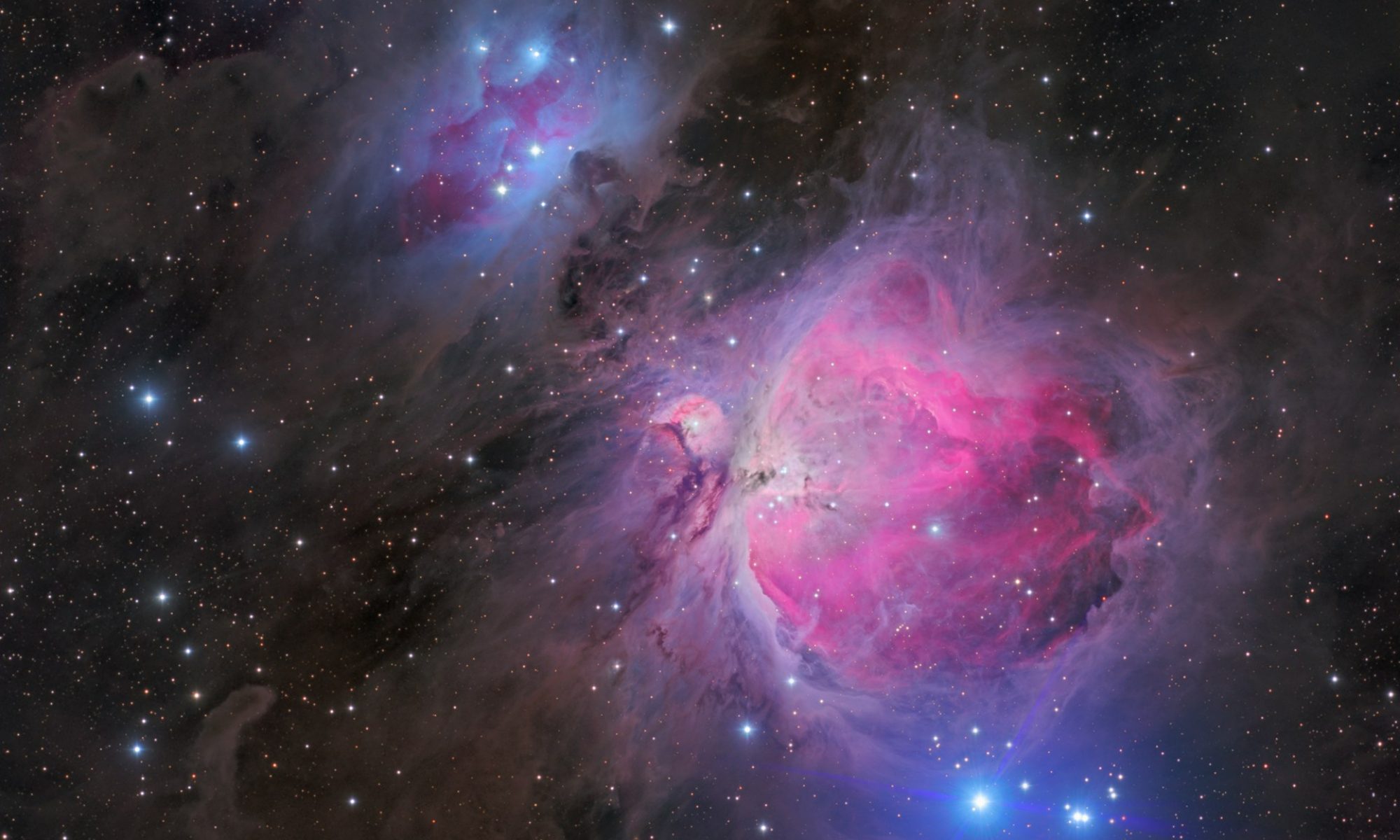
Here is a crop of the better part of the 27,810 sec integration. There is a super long story of why I used an old Master Flat and took no flats for these (we don't want to go there). Still working on the blues:


Feel free to fix it😉
Don't see a lot of benefit in 27k vs 12k sec from backyard. Will try on Orion next year again.
Hi Greg,
Yes at some point, adding more data will add less and less improvements in image quality.
Mabula
