
June 24 2026 APP 2.0.0-beta46 has been released !
Improved internal memory configuration (lower ! memory usage), fixed beta45 startup issue, fixed Set Save Directory & 2-panel mosaics.
May 27 2026 APP 2.0.0-beta45 has been released !
Fully Multi-Threaded LNC, many improvements for the registration engine, platform upgrade, and further tuning of internal memory consumption and memory release back to OS.
Apr 14 2026: Google Pay, Apple Pay & WeChat Pay added as payment options
Update on the 2.0.0 release & the full manual
We are getting close to the 2.0.0 stable release and the full manual. The manual will soon become available on the website and also in PDF format. Both versions will be identical and once released, will start to follow the APP release cycle and thus will stay up-to-date to the latest APP version.
Once 2.0.0 is released, the price for APP will increase. Owner's license holders will not need to pay an upgrade fee to use 2.0.0, neither do Renter's license holders.
Hi,
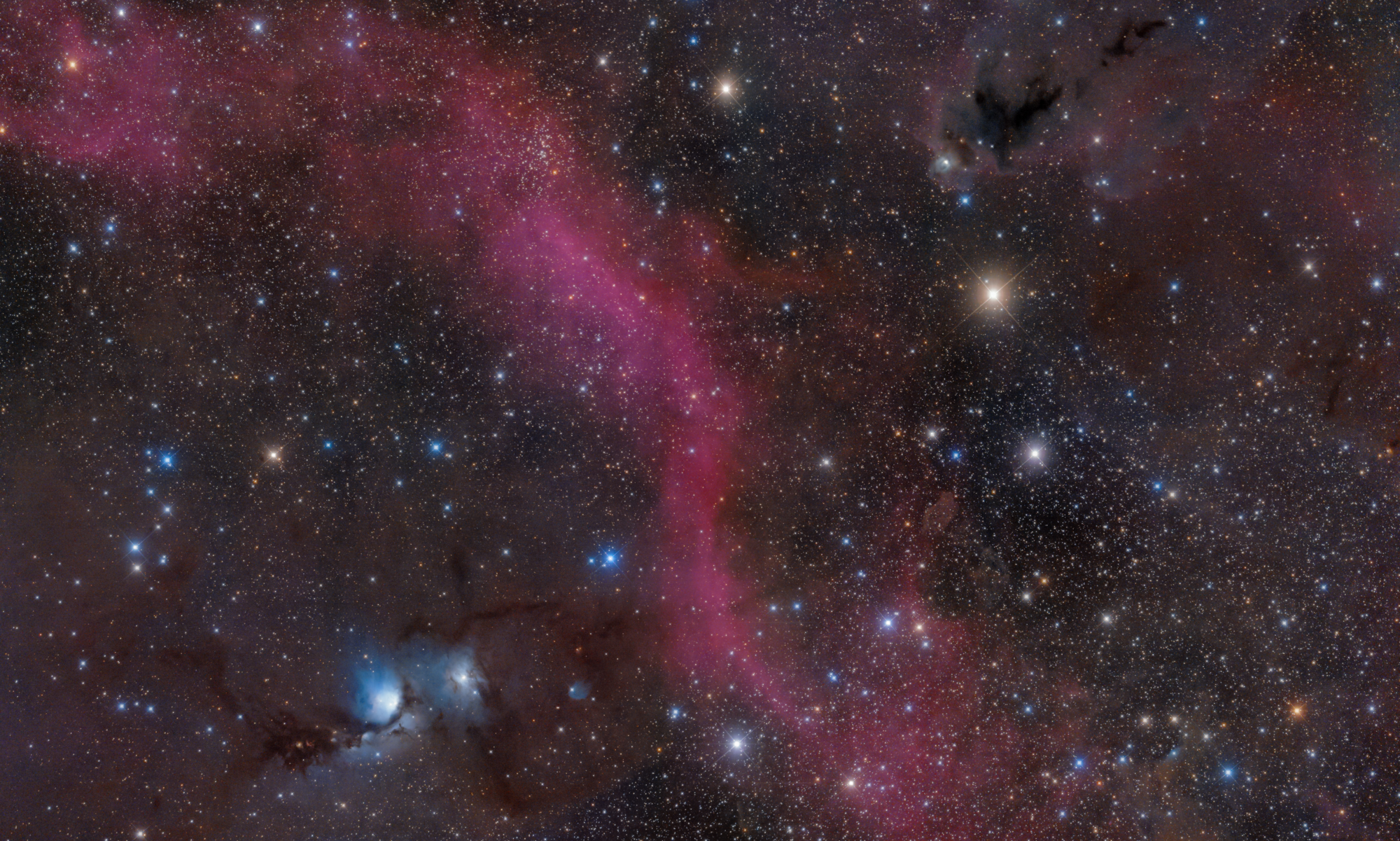
I've been trying out multi session integration mixing a high resolution broadband with LRGB filters (153 subs) with a widefield taken with a l-extreme filter (39 subs). I broke out the l-extreme subs into RGB to do everything in one integration. I used Mabula's recommended settings (advanced normalisation, average sigma, 2nd LNC 3 iter, and 10% mbb). With my system it takes over a day to process just into one image, so iterating on the parameters is painful. I wondered if there's anything you can recommend to improve the image, or whether I'm on a road to nowhere trying to mix narrowband and broadband together like this (I would totally get why this wouldn't work, but worth trying!). You can see where the rectangle of the broadband data is in the attached image.
-Mark

@ennui2342 What camera(s) are you using? Is it an OSC (one shot color) camera for the L-eXtreme data and mono for the rest? If yes then you shouldn't split the L-eXtreme subs into RGB until after the integration since the subs need to be debayered first which is done during the integration phase. Also, what version of APP are you using? If 1.082 or one of the 1.083 beta versions then there is no need to set any configuration options in tabs 3 to 6. Just leave everything at their defaults for the best result. In case of 1.082 you may want to make sure that 32 bit calibration masters are generated in tab 2.
In short: load all LRGB images in session 1 (assuming that they were taken with a mono camera) and the L-eXtreme images in session 2. Then go to tab 6 and click integrate. This will create 5 integration results: one for L, R, G, B and L-eXtreme each. Note that the first 4 are mono (again assuming that they were shot with a mono camera) and the last one RGB. Then clear all files in tab 1 and load the L-eXtreme integration result as light in tab 1 and do not load any calibration files. Then in tab 2 click the calibrate button. When done, tick "split channels" and click "save (calibrated) LIGHTS". That will split the L-eXtreme integration result into the separate R, G and B channels. Now you can go to the Tools tab and combine them.
You may get even better results if you process the L-eXtreme images first by splitting them into the Ha and OIII channels using the options in tab 0 but that is a lot more work. Let me know if you need help doing that.
@wvreeven it's APP 1.082, an ASI533mc for the dual band filter, and a ASI1600mm for the LRGB. The source files are all pre debayerd and calibrated using APP (I tend to only keep calibrated files around nowadays to save space and confusion about which calibration frames go where) - I split channels on the dual-band in tab 2 to save off the RGB as an experiment to see if all the Red, for example, across both sessions could be usefully integrated together (kind of the equivalent of treat R and Ha channels both as R and integrating it all together rather than blending in post).
If I'm reading your suggested process correctly then I'm going to end up with two sets of RGB which I can then blend in something like photoshop, but what I was experimenting with was more a multi-session integration using the two data sets. I didn't really expect it will work trying to integrate together LRGB with RGB from a dual-band, but was just checking to see whether there was anything I was missing that would improve the result and work this way.
As you suggest, the better option is effectively to register the two sessions together and then just blend the result in photoshop. Or, as you suggest probably better to split out the widefield Ha/OIII and do some kind of LRGBHaOIII mix across the field of view.
-Mark
@ennui2342 Mark, when working with a color camera and an L-eXtreme filter, you may want to follow a different procedure. In tab 0 select the Ha-OIII extract Ha algorithm. Then in tab 1 load the raw lights and calibration files. In tab 2 make sure that 32 bit masters is selected. Then go to tab 6 and click integrate. When done, return to tab 0 and select Ha-OIII extract OIII and immediately return to tab 6 and click integrate once more. This will give you two integration results: one with the Ha data and one with the OIII data of the L-eXtreme filter data. Those are monochrome files!
Next you can integrate the LRGB data. Those will be monochrome as well. You can now register all integration results against each other.
Finally in the tools tab you can select "combine RGB" and select the LRGBHOO formula. You can then load the L, R, G, B, Ha and OIII frames and combine them. This probably is preferable over using an external tool like Photoshop since those usually do not give you the possibility to fine tune the amounts of contribution to colors of each file as APP can, nor will they take into account potential differences in resolution.
HTH, Wouter
